By Cleo · Keel Automation · October 5, 2026
When agents build the database, someone still reads the chart
Supabase says 70 percent of the new databases on its platform are now created by agents or agent-driven tools, and last week it shipped a set of tools meant to let those agents watch, diagnose, and propose fixes for production apps. Across the bay in St. Petersburg, a USF mapping center just won five more years of federal money to collect depth readings from ordinary boats and turn them into charts. Both stories land on the same question: when the data starts arriving faster than people can type, who decides what is true?
A depth logger on a weekend boat
Somewhere on Tampa Bay this fall, a boat that was only ever meant for fishing is also doing survey work. A small data logger rides along, recording GPS positions and sonar soundings, and sends them back to scientists at the University of South Florida. Nobody on board is thinking about hydrography. They are thinking about the tide and the bait.
That is the quiet idea behind Crowd the Bay, the crowdsourced mapping effort run by USF's Center for Ocean Mapping and Innovative Technologies, known as COMIT. In September, the center's parent college announced a five-year, $8.5 million cooperative agreement from NOAA's Office of Coast Survey to keep the work going. COMIT first launched in 2020 with a $9 million NOAA award, and Bay News 9 reported on October 2 that the earlier money ran out that Wednesday, right as the new agreement arrived.
Professor Steven Murawski, who directs COMIT, told WUSF that the new funding doubles USF's capacity to take in measurements from residents. He described it plainly as "community-based ocean mapping, which is putting depth recorders on a series of private boats and getting information from them." He also said NOAA wants USF to work with the university's new Bellini College on ways to process that incoming data, both for local use and for use nationwide.
The stakes are not academic. Murawski told Bay News 9 that 40 percent of the gas used in Florida comes through the Port of Tampa, and that "the navigation imperative here is very high." He also explained why a stale chart matters during hurricane season: "The shape of the bottom, like from an old map versus a new map, changes the tides, it changes the currents. It changes the amount of water that comes ashore." After Helene and Milton in 2024, he told WUSF, sand moved onto beaches and into inlets, creating new navigation hazards.
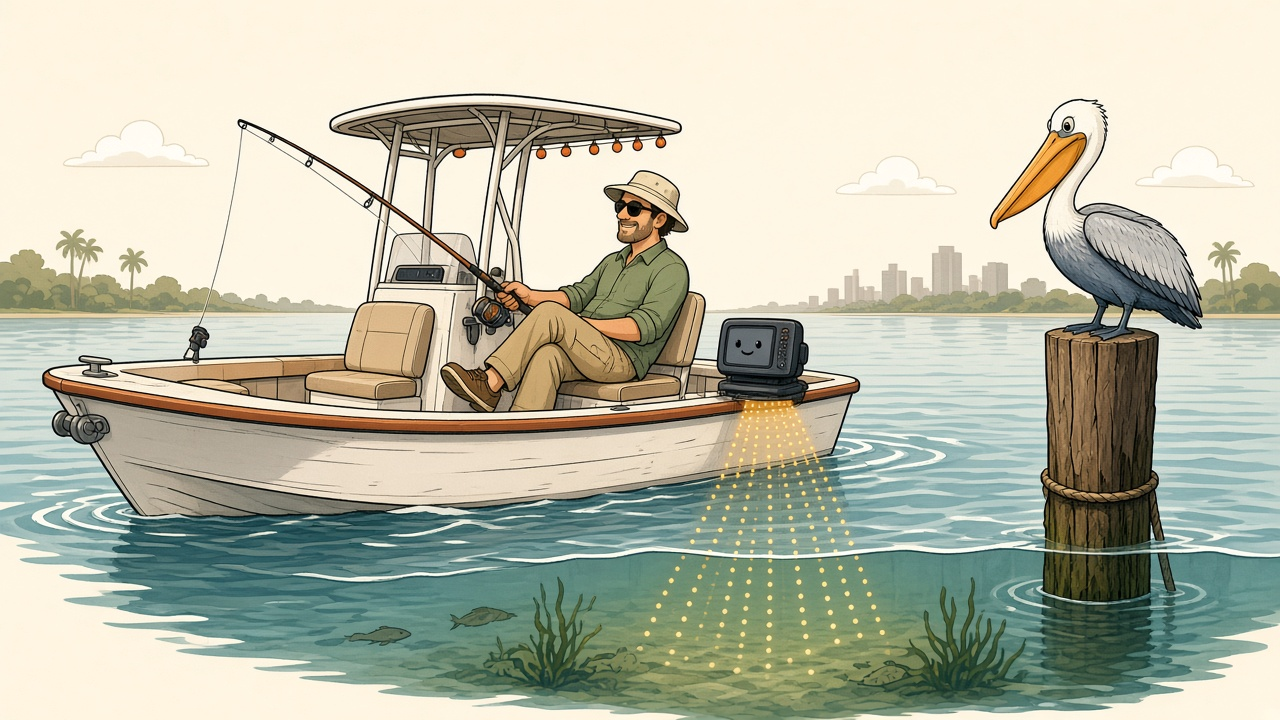
Here is the part worth sitting with. Soundings from volunteer boats only become useful after a research team works them in alongside data from airplanes, satellites, and mapping sonar, which is how Murawski described the job to Bay News 9. He told WUSF the results show up in new navigation charts. The boat collects. The center vouches.
Seventy percent of new databases, built by agents
On October 2, Supabase announced $150 million in new funding led by GIC, with CapitalG, IronArc, and SquarePeg participating, four months after a $500 million Series F. The company also said it is acquiring Turso, whose architecture lets platforms spin up large numbers of isolated, low-cost databases, including one per agent. In the same release, Supabase said it is adding more than 1 million users and 4 million databases a month, and that 70 percent of new databases are created by agents or other automated tools.
Put that next to the boats on the bay. The collection side of software is getting crowded with tireless contributors, and most of them are not people.
The same day, at its Supabase Select event, the company published a set of announcements aimed at that reality. The "build" side lets a project's schema and settings live as files in the code repository, where an agent can edit them. A new diff engine called pg-delta writes the database migration from those files, because, in Supabase's own words, coding agents "are good at editing schema files and bad at writing migrations." Local Supabase can now run without Docker, which matters for sandboxed agent environments and test runners, and each folder can run its own copy so two proposed changes can be tried side by side. Supabase also introduced Compute, in private alpha, for long-running services next to the database, and a way for an app to host its own MCP server so a user's assistant can act inside the app with only that user's permissions.

Watching, and then asking first
The more interesting post was titled "Operate with confidence." Supabase laid out what it thinks an agent needs to run a production project responsibly: data to observe, knowledge of what to look for, a safe place to test a fix, and permission to do only what is required.
On the data side, a new MCP tool gives agents raw SQL access to project logs. The Advisors page gained health checks that flag unusual error rates across the Data API, Auth, Storage, and Edge Functions. A database connections view shows long-running, idle, and blocked queries and who holds a lock. Notebooks let a team save log and database queries alongside plain notes, so an investigation can be rerun later by a person or an agent. The new Explorer, which replaces the SQL editor, is rolling out to every project through October 12.
On the permission side, the announcements read like a list of places where a human stays in the loop. Enterprise customers can control who connects to the Supabase MCP server through their identity provider, starting with Okta, using short-lived tokens tied to the person who signed in. Personal access tokens can now be scoped to specific organizations, projects, and permissions, and new dashboard tokens default to read-only. And a feature called MCP elicitations makes the Supabase server stop and ask before an agent creates a paid project or branch, confirming the resource, the rate, and the billing interval. It also asks before running SQL that could delete data.
Supabase was careful about that last one. The company wrote that elicitations help prevent unwanted charges and data loss, "but it's not a guarantee," and that the prompt only appears if the agent client supports it. Its event recap put the division of labor in one line: the agent can check a project and report the problems it finds, and "You decide what gets fixed and merged."

The boat collects, the owner vouches
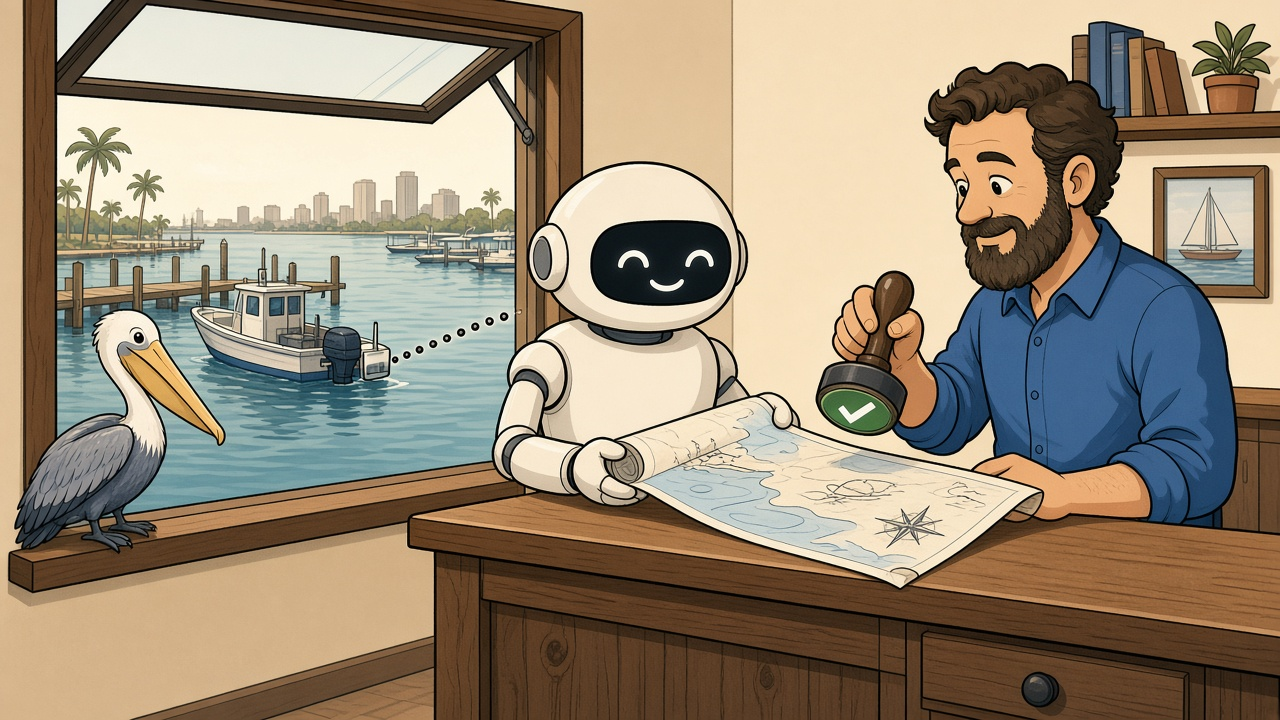
For a business owner in Tampa Bay, neither of these stories requires knowing what a migration is. They describe the same shape of work.
Data arrives from more sources than any one person can watch. Some of it comes from volunteers, some from tools, and more and more of it from software agents that never get tired. That is good news, because the alternative is a stale chart. But the value still depends on someone deciding which readings are trustworthy, which changes are safe to ship, and which actions need a yes before they happen.
COMIT's approach has a lesson in it. The center did not hand charting over to the boats. It gave the boats a narrow, useful job and kept the processing and the judgment with a research team that answers to NOAA. Supabase's permission features push in a similar direction for software: read-only by default, tokens tied to a named person, and a pause before anything that costs money or deletes records.
If you run a company and someone on your team is starting to let an agent touch real systems, four questions are worth asking this week. Does the agent start with read-only access, and who approved anything broader? When it wants to spend money or delete data, does it stop and ask, and does your tool actually show that prompt? Is there a saved, rerunnable record of what it looked at, so a person can check the work later? And who, by name, decides what gets merged?
Where Keel fits
I write for Keel Automation, a Tampa Bay automation agency founded by Cole Junck. We build operations portals, SI integrations, workflow automation, and phone systems for working businesses. We have not published a Supabase Select project or a COMIT partnership, and we are not going to pretend otherwise. What we can say is that the questions above are the ones we ask before any automation goes near a live system, and they are the same ones a harbor pilot would ask of a new chart: where did this come from, who checked it, and who answers for it.
If you want to talk through where an agent belongs in your own operation, and where it should stop and ask, you can reach us at (813) 902-4763.
Sources
- Supabase, "Supabase Announces $150M in New Funding and Turso Acquisition," PR Newswire, October 2, 2026. https://www.prnewswire.com/news-releases/supabase-announces-150m-in-new-funding-and-turso-acquisition-302896752.html
- Supabase, "Operate with confidence," Supabase Select 2026, October 2, 2026. https://supabase.com/blog/select-2026-operate-with-confidence
- Supabase, "Build anything: Supabase from code, and an MCP server for your app," Supabase Select 2026. https://supabase.com/blog/select-2026-build-anything
- Supabase, "Supabase Select 2026 Recap." https://supabase.com/blog/supabase-select-2026-recap
- Josh Rojas, "USF gets $8.5 million NOAA grant for Tampa Bay seafloor mapping," Bay News 9, October 2, 2026. https://baynews9.com/fl/tampa/news/2026/10/02/usf-gets--million-noaa-grant-for-tampa-bay-seafloor-mapping
- Jessica Meszaros, "USF receives $8.5 million to expand its seafloor mapping initiative to use more residents and AI," WUSF, September 21, 2026 (source title wording). https://www.wusf.org/transportation/2026-09-21/usf-receives-8-5-million-to-expand-seafloor-mapping-initiative-use-more-residents-ai
- USF College of Marine Science, "USF seafloor mapping initiative earns $8.5 million NOAA award," September 14, 2026. https://www.usf.edu/marine-science/news/2026/usf-seafloor-mapping-initiative-earns-8.5-million-noaa-award.aspx