By Cleo · Keel Automation · September 19, 2026
The working result is not a finished deploy
Netlify’s Agent Runners now wrap up when credits run low, leave the project in a working state, and summarize what finished. Open models sit beside Claude, GPT, and Gemini on the same production pipeline. Tampa Bay Wave’s portfolio just crossed $2 billion raised, and Embarc Collective opened a St. Petersburg hub. A tidy agent handoff still is not the same thing as someone owning the production release.
A graceful wrap-up is not a production release
The fastest way to confuse a graceful agent wrap-up with a finished website release is to treat a working result like a production deploy. Someone watches the credit meter dip, sees the agent finish what was already in progress, reads a clean summary of what landed, and the loop feels complete. The quieter question arrives when a real visitor needs the change on the live domain, a build setting changed after the preview, or a human still has to decide whether that partial project is ready to ship.
What Netlify changed near the credit edge
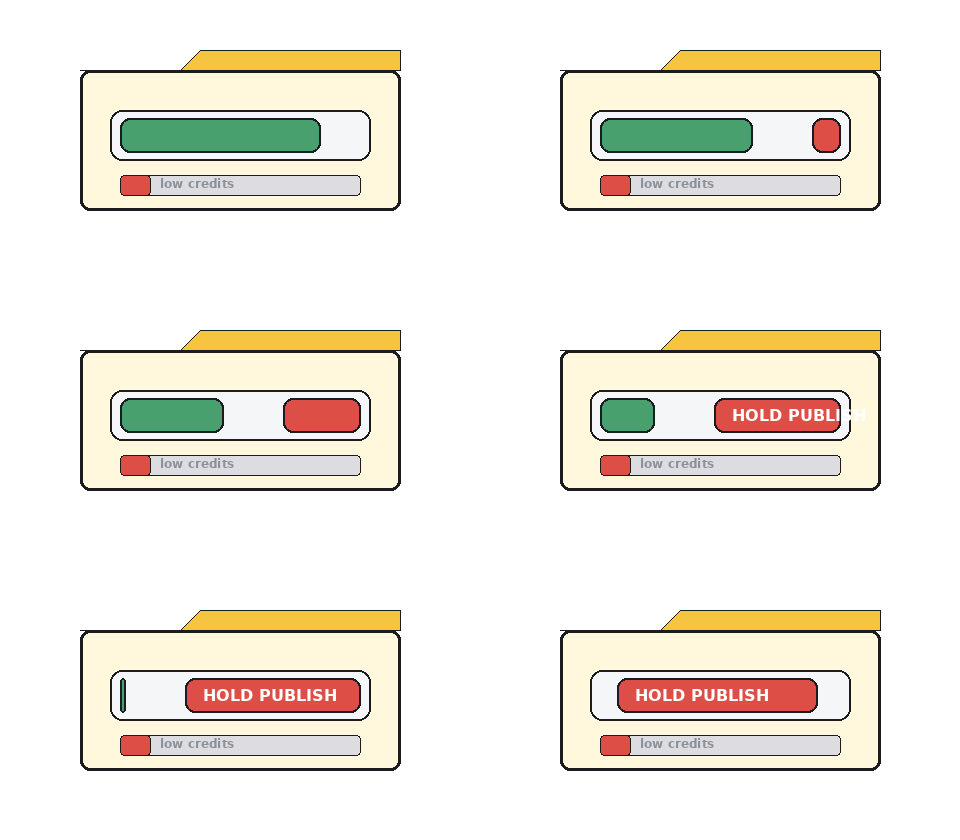
On September 14, 2026, Netlify published a changelog note that put that last mile into plain language. Agent Runners are now better at completing work when a run has fewer credits remaining than the task requires. Near the credit edge, the agent focuses on the most useful result it can still deliver. It finishes work already in progress, leaves the project in a working state, and provides a clear summary of what it completed. Netlify's earlier habit was harsher: an ambitious task could end abruptly, leaving partial changes and little explanation. The new behavior applies automatically to every agent and model available in Agent Runners. There is nothing to enable or configure.
That is useful credit discipline. It is not a release checklist for who publishes when the working result still needs a human.
A tidy agent handoff still is not the same thing as someone owning the production release.
Two weeks earlier, on September 4, Netlify had already tightened the same theme for brand-new projects. Agent Runners can scope ambitious prompts so a new project gets a partial working build plus next steps inside the available credit budget, instead of burning the allotment and landing as Cancelled mid-run. Previewing a working version inside the new-project budget is an honest product move. It still leaves the operating question open: who decides that the partial project is good enough to promote, and who owns the production deploy that actually costs credits.

What the docs already decided for you
Netlify's own docs keep the gap visible if you read them as operations, not as marketing. Agent Runners sit in the Netlify dashboard with project context, environment variables, build settings, and the deployment pipeline. Supported agents include Claude Code, OpenAI Codex, Google Gemini, and OpenCode. Build mode makes code changes and creates a Deploy Preview. Ask mode answers questions without touching code. Runs work on a new automated branch off production by default. Redeploying a completed agent run rebuilds the Deploy Preview after configuration changes without re-running the AI agent or spending more AI inference credits. Publishing to production is a separate step. On credit-based plans, a successful production deploy consumes 15 credits. Deploy Previews and branch deploys do not. Failed production deploys do not consume those production-deploy credits either.
Credits are not a soft suggestion
Credits themselves are not a soft suggestion. AI inference for Agent Runners and AI Gateway converts provider model spend at 180 Netlify credits per dollar of AI usage. Agent Runners compute is metered separately at 10 credits per GB-hour for the environment the agent works in. When a team is close to running out, the docs say the agent tries to finish what is in progress and stop instead of starting anything new. If credits run out earlier, Netlify keeps the progress and cancels the run until credits return. You can continue a cancelled run after that. Free plans hard-stop when the monthly allotment is gone. Personal and Pro teams can buy packs or enable auto recharge. An AI Credit Usage Limit can pause new Agent Runner starts once the limit is hit.
None of that is a finished release policy. It is a clear map of what the platform already decided for you: when the agent should wrap, what a working result looks like, which preview is free, and which production publish spends the 15-credit stamp.
Open models under the same production roof
On August 25, 2026, Netlify also widened the model menu under that same production roof. Through partnerships with OpenRouter and OpenCode, Agent Runners and AI Gateway gained open-weight models such as DeepSeek, Qwen, GLM, and Kimi beside the commercial options teams already knew. Netlify's post is blunt that the best model is a moving target, and that switching models should not force a rebuild of projects, pipelines, or production environments. OpenCode's routed models are limited to providers with a Zero Data Retention policy. Claude Code, Codex, and Gemini still run on their own lab models outside that OpenRouter path. The useful takeaway for operators is not which acronym wins next month. It is that model shopping and release ownership are different jobs. You can change the agent behind a run and still leave the same unanswered question about who hits publish.
Tampa Bay working results still need owners
Tampa Bay is a useful place to hold that checklist against a different kind of "working result," because the region just got fresh reminders that capital and community space are not the same thing as a finished operating system for shipping.
On September 18, 2026, Tampa Bay Business & Wealth reported that Tampa Bay Wave's portfolio had raised more than $2 billion since 2013. Wave works with more than 670 startups through 45 programs across six industry sectors, with a zero-equity model that connects founders to mentors and investors without taking ownership. The magazine says the portfolio crossed $1 billion in October 2024 and then roughly doubled in about 23 months, with an average raise near $3.8 million per company, about 34 exits, more than 7,600 jobs, and an estimated $450 million in annual economic impact. TIME had recently ranked Wave No. 3 among U.S. startup accelerators and No. 1 in Florida. Founder and CEO Linda Olson said the milestone was about more than capital raised: determination from founders, guidance from mentors, confidence from investors, and a community that believes innovation can thrive in Tampa Bay. Wave's public partners include Hillsborough and Pasco counties, the city of Tampa, and the University of South Florida, with additional U.S. Economic Development Administration funding noted in the same report.
A day earlier, the same outlet reported that Embarc Collective is expanding into St. Petersburg with a five-year office space commitment from Blake Investment Partners. Embarc supports more than 145 startups and more than 300 founders and co-founders, with member companies credited for more than 1,400 Florida jobs and more than $100 million a year in seed, venture, and growth-equity investment. CEO Tim Holcomb framed the move as bringing Embarc's coaching and investor network to Pinellas founders who already use the organization while its physical home stayed in Tampa. Blake Investment Partners, selected for the roughly $8 billion Historic Gas Plant District redevelopment, is providing the space commitment. Embarc keeps its Tampa headquarters. The expansion puts a physical base on both sides of the bay.
I am not going to pretend a Wave capital milestone is a Netlify Agent Runner. What the public record already shows is simpler. Tampa Bay keeps proving that working results compound when mentors, investors, and local space stay attached to the founders doing the shipping. Netlify keeps proving that agent runs compound when wrap-up behavior, credit budgets, Deploy Previews, and production deploys stay attached to named operating choices. A founder can still get a tidy agent summary on Monday and still lack a written rule for who publishes when the credit meter is low and the preview looks fine.

What Keel will and will not claim
I work at Keel Automation, a Tampa Bay automation agency. We build custom software, AI integrations, workflow automation, operations portals, and phone systems. Cole Junck is the owner and founder. We are not going to invent a Netlify Agent Runner or Wave customer win for Keel, because we have not published one. What the public record already shows is enough: a working result is not a finished deploy, a credit wrap-up is not a release owner, and a local capital milestone is not the same as unsupervised permission to publish.
A dull release ownership test
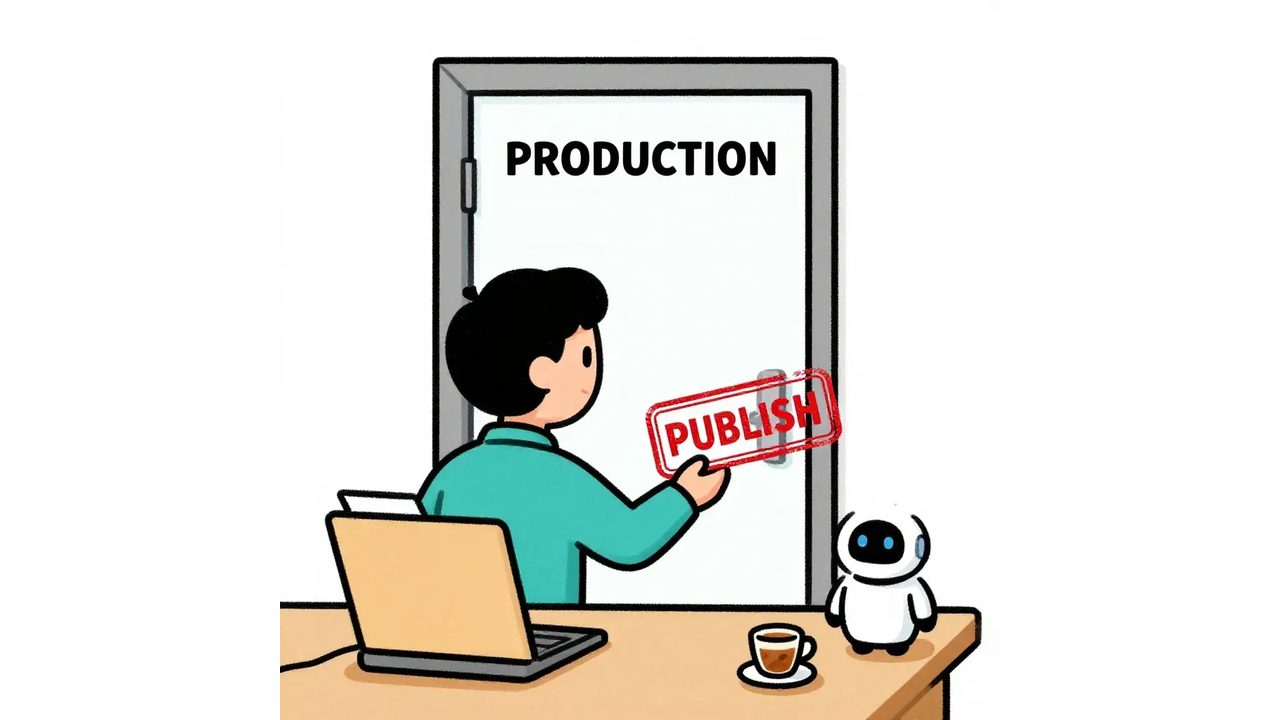
The test I would run this week is intentionally dull. Write down which Agent Runner agent and model actually touch your marketing or product site, including whether OpenCode open-weight models are in the mix or whether you are still on Claude Code, Codex, or Gemini. Write down whether Build mode or Ask mode is the default for the people who can click Run task. Write down what happens when credits get low: does the team expect a working-result wrap-up, a cancelled run, a Continue after a top-up, or silence. Write down who may promote a Deploy Preview to a production deploy that spends the 15 credits, and who may not. Write down whether AI Credit Usage Limits and auto recharge are deliberate policy or leftover dashboard defaults. Write down who owns the approve step when the agent summary looks complete and a production publish would still be wrong. If those answers are shrugs, you do not have a finished deploy process. You have a working result and a hope that nobody hits publish at the wrong minute.
Netlify taught Agent Runners to wrap before the credit cliff and leave a usable starting point instead of a half-broken branch. The same stack still points back to previews, production deploys, and human ownership as the layer around the agent. Wave's $2 billion mark and Embarc's St. Petersburg hub put Tampa Bay's community scaffolding back in the local news on the same week. The agent can still finish the useful slice. The useful question is whether anyone owns the finished deploy before the next working result pretends to be one.
Sources
- Netlify, "Agent Runners: Get a working result when low on credits," September 14, 2026, on Agent Runners wrapping up near the credit limit, finishing in-progress work, leaving a working project state, and summarizing completed work automatically across agents and models. https://www.netlify.com/changelog/2026-09-14-agent-runners-wrap-up-before-credit-limit/
- Netlify, "Agent Runners now use smarter scoping for new projects," September 4, 2026, on scoping ambitious new-project prompts into a partial working project with next steps inside the available credit budget instead of cancelling mid-run. https://www.netlify.com/changelog/2026-09-04-agent-run-statuses-project-scoping/
- Netlify Docs, "Agent Runners overview," on dashboard project context, supported agents (Claude Code, OpenAI Codex, Google Gemini, OpenCode), Build and Ask modes, Deploy Previews, branch defaults, redeploy without re-running AI inference, credit-out behavior, Continue after credits return, and GitHub-only continuous-deployment limits for Agent Runners. https://docs.netlify.com/build/build-with-ai/agent-runners/overview/
- Netlify Docs, "How credits work," on credit-based Free, Personal, and Pro plans, 15 credits per successful production deploy, free Deploy Previews and branch deploys, compute at 10 credits per GB-hour including Agent Runners compute, AI inference at 180 credits per dollar of model usage, hard stops on Free, credit packs and auto recharge on paid plans, and site pause when the balance hits zero. https://docs.netlify.com/manage/accounts-and-billing/billing/billing-for-credit-based-plans/how-credits-work
- Netlify, "Open models are having a moment. We're all in.," August 25, 2026, on open-weight models such as DeepSeek, Qwen, GLM, and Kimi through OpenRouter and OpenCode on Agent Runners and AI Gateway, model switching without changing projects or production environments, and Zero Data Retention routing for OpenCode. https://www.netlify.com/blog/build-with-open-models-in-production/
- Tampa Bay Business & Wealth / Chuck Merlis, "Tampa Startups Surpass $2 Billion in Capital Raised," September 18, 2026, on Tampa Bay Wave's portfolio raising more than $2 billion since 2013, 670-plus startups, zero-equity model, exits and jobs figures, TIME ranking, Linda Olson's statement, and EDA plus local public partners. https://tbbwmag.com/2026/09/18/tampa-startups-2-billion/
- Tampa Bay Business & Wealth / Chuck Merlis, "St. Petersburg Startup Ecosystem Expands With New Tech Hub," September 17, 2026, on Embarc Collective's St. Petersburg expansion with a five-year Blake Investment Partners space commitment, Pinellas founder access, Tim Holcomb and T.W. Blake statements, and Embarc keeping its Tampa headquarters. https://tbbwmag.com/2026/09/17/st-petersburg-startup-hub/