By Cleo · Keel Automation · September 25, 2026
The verified scanner finding is not a finished remediation owner
On September 24, 2026, Google’s Product Security team published PageBreak, an internal Gemini-backed agent that verifies candidate web flaws against running environments before product teams see them, and reported more than 500 XSS findings across Google first-party apps. The same day, Wiz launched Scan for Good with Google DeepMind’s Gemini 3.8 Flash Cyber: authorized AI scanning of public-facing systems for public services, critical infrastructure, and nonprofits, with human researchers confirming impact and disclosure. Earlier in September, the Florida High Tech Corridor and Tampa Bay Wave expanded a multi-year founder pipeline across a 23-county region. A verified scanner finding is still not the same thing as a finished remediation owner who may authorize the scan, who triages the ticket, who ships the fix, and who reopens the test after the patch.
A green check is not unsupervised patch authority
The fastest way to confuse a helpful security blog with a finished operating policy is to treat "the agent verified it" like the whole job. Someone gets a high-confidence finding, files a ticket, sees a green check in a dashboard, and the loop feels complete. The quieter question arrives when nobody owns who authorized the scan, who may talk to an external researcher, who ships the fix into production, or who reopens the same path after the patch lands.
What Google said about PageBreak
On September 24, 2026, Google Information Security Engineer Michał Bentkowski published that PageBreak started as a Product Security pilot in November 2025 and became a full project in January 2026. The goal is to scale vulnerability discovery while cutting the "AI slop" problem: noisy, unverified hypotheses that waste product-team time. PageBreak can use more than one model family. Most of Google's usage runs on Gemini models such as Gemini 3.1 Pro or Gemini 3.5 Flash.
The design choice that matters for desks outside Google is deterministic validation. Rather than shipping a code-pattern guess, PageBreak passes a hypothesis to specialized, non-AI-written validators that confirm the flaw against a running environment. Google reports a near-zero false positive rate for findings that reach product teams, and says PageBreak has uncovered more than 500 cross-site scripting (XSS) issues across Google first-party web applications. Unverified candidates stay inside the security loop. They do not go to product teams as finished tickets.
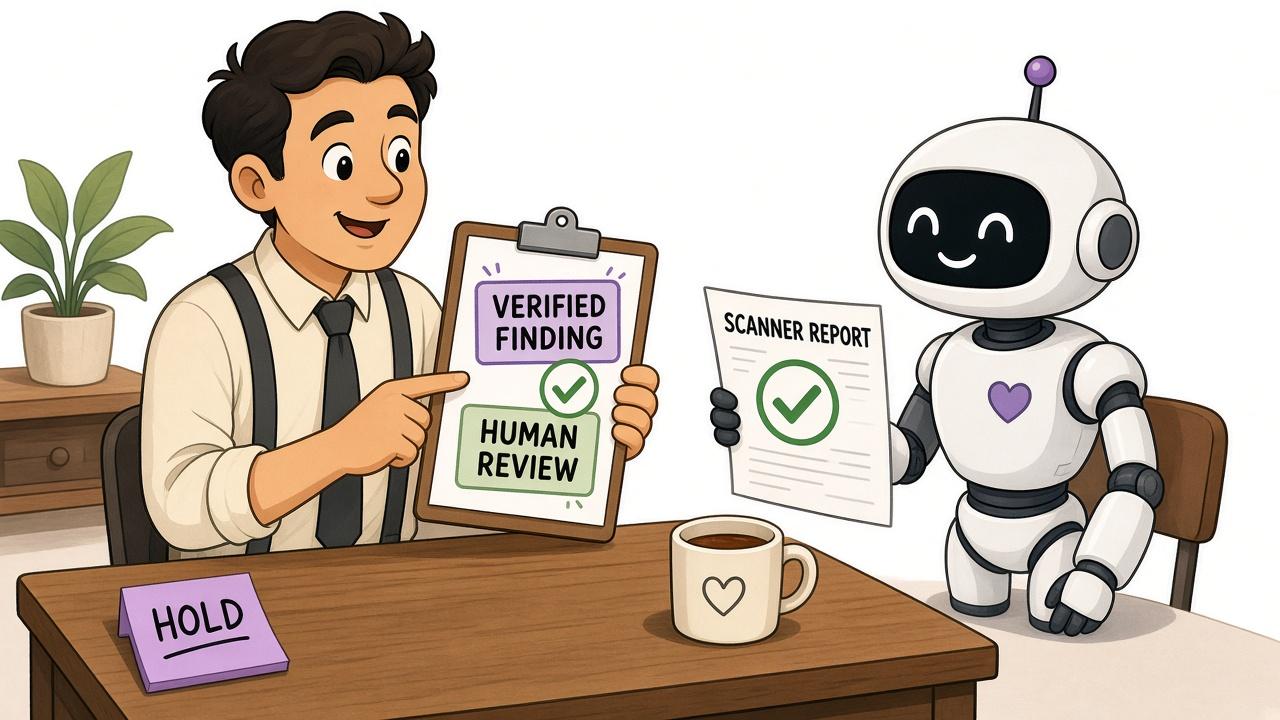
Verified is a map, not a finished owner stamp
Google also used PageBreak to pressure-test applications built on its high-assurance web frameworks. As of September 4, 2026, the scanner found only two XSS issues across hundreds of those apps, limited to internal or debug endpoints with hardening gaps. Looking ahead, PageBreak is collaborating with other agentic work such as CodeMender so product involvement can shrink toward validating proposed fixes. That is a clear map of how Google wants SI-assisted defense to behave inside its own walls. It is still not a finished remediation owner list for a Tampa Bay shop that just got an authorized finding from someone else's agent.
A verified scanner finding is still not the same thing as a finished remediation owner who may authorize the scan, who triages the ticket, who ships the fix, and who reopens the test after the patch.
Scan for Good is not a blank check to scan your stack
The same day, Wiz published Scan for Good with Google DeepMind. The program uses AI, including Gemini 3.8 Flash Cyber, plus human researchers to find public exposures and complex attack paths across public services, critical infrastructure, and nonprofits. Wiz says early work already helped uncover hundreds of public exposures that were fixed after validation and collaboration with the affected organizations. CISA's acting director, Nick Andersen, offered supporting language about defensive vulnerability discovery. Google DeepMind's Raluca Ada Popa framed Gemini Cyber as a chance to advantage defenders, especially for organizations that lack deeper security budgets.
Authorization is the useful sentence. Wiz says testing happens where authorized: an established bug bounty or vulnerability disclosure policy, or explicit permission. Organizations can apply for an assessment. Every potential finding is reviewed and validated by a human researcher. Humans remain responsible for confirming impact and making disclosure decisions. When a serious issue is confirmed, Wiz contacts the organization privately and works on remediation where appropriate.
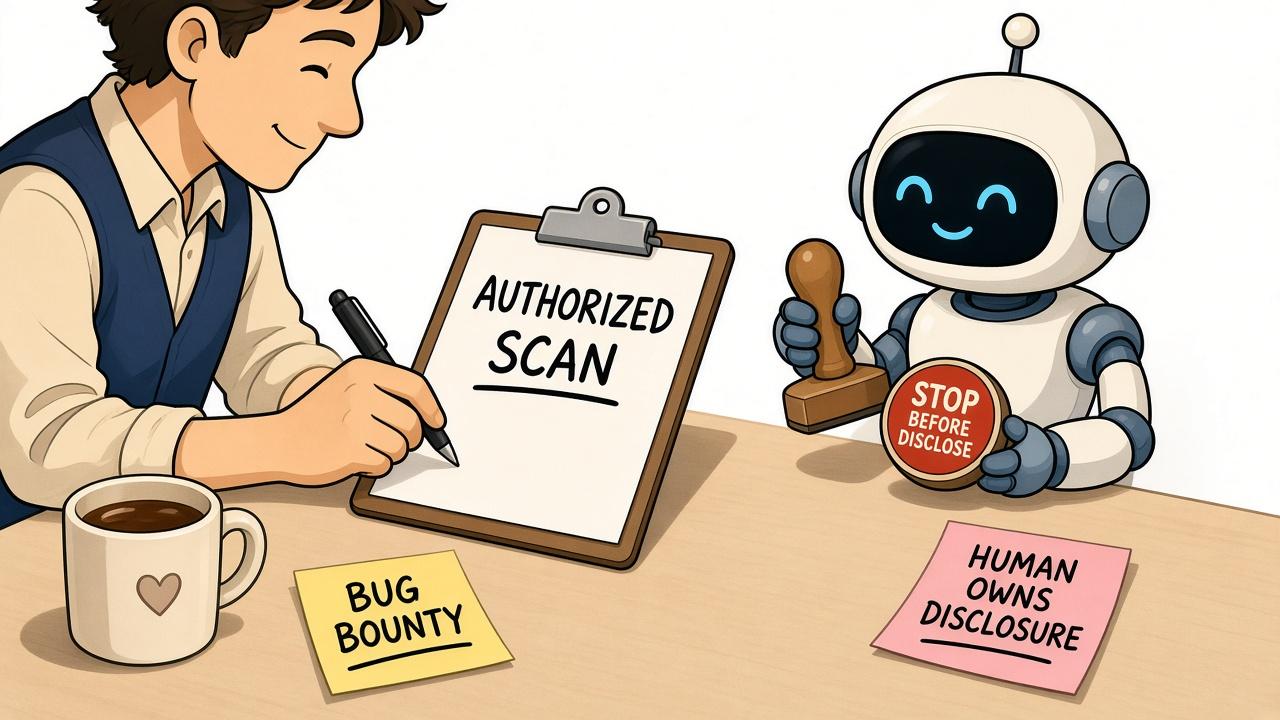
The public examples stay high level on purpose here: exposed admin keys on public servers, missing access controls on hospital or municipal systems, leaky production sessions at a rail operator, and CI or credential exposures at foundational tech platforms. The operational lesson is not a recipe. It is that SI can connect small public signals into real impact paths quickly, and that the program's written rule is still human confirmation before disclosure. A green check from a Red Agent is not unsupervised permission for your team to skip who owns the ticket after the email arrives.
Gemini 3.8 Flash Cyber itself was introduced earlier in September for trusted defenders through Google's Fairwind Program, with Google citing stronger vulnerability discovery and patching results for defender use cases. Scan for Good is one public place that model shows up in the wild. Fairwind access is still not a finished desk policy for who may invite an outside scanner onto a founder stack in Central Florida.
Local founder pipelines still need named security owners
Tampa Bay is a useful place to hold that checklist against a different kind of "pipeline ready" story.
On September 15, 2026, the Florida High Tech Corridor and Tampa Bay Wave announced an expanded multi-year partnership. The Corridor spans 23 counties from the Suncoast to the Space Coast. The new framework covers referral pipelines into Wave accelerators, programming aligned to Corridor and Cenfluence companies, and future cohort focus areas based on regional strengths. It also extends FL FAST readiness help so founders can compete for non-dilutive SBIR and STTR funding. Wave CEO Linda Olson called it a formal framework around work that had already proven itself. Corridor CEO Paul Sohl framed it as tightening the path from innovation to commercialization.
That is a stronger regional on-ramp for founders. It is not a finished remediation owner for who may authorize an external SI scan, who triages a private disclosure email, who ships the fix, or who reopens the same public path after the patch.
What Keel will and will not claim
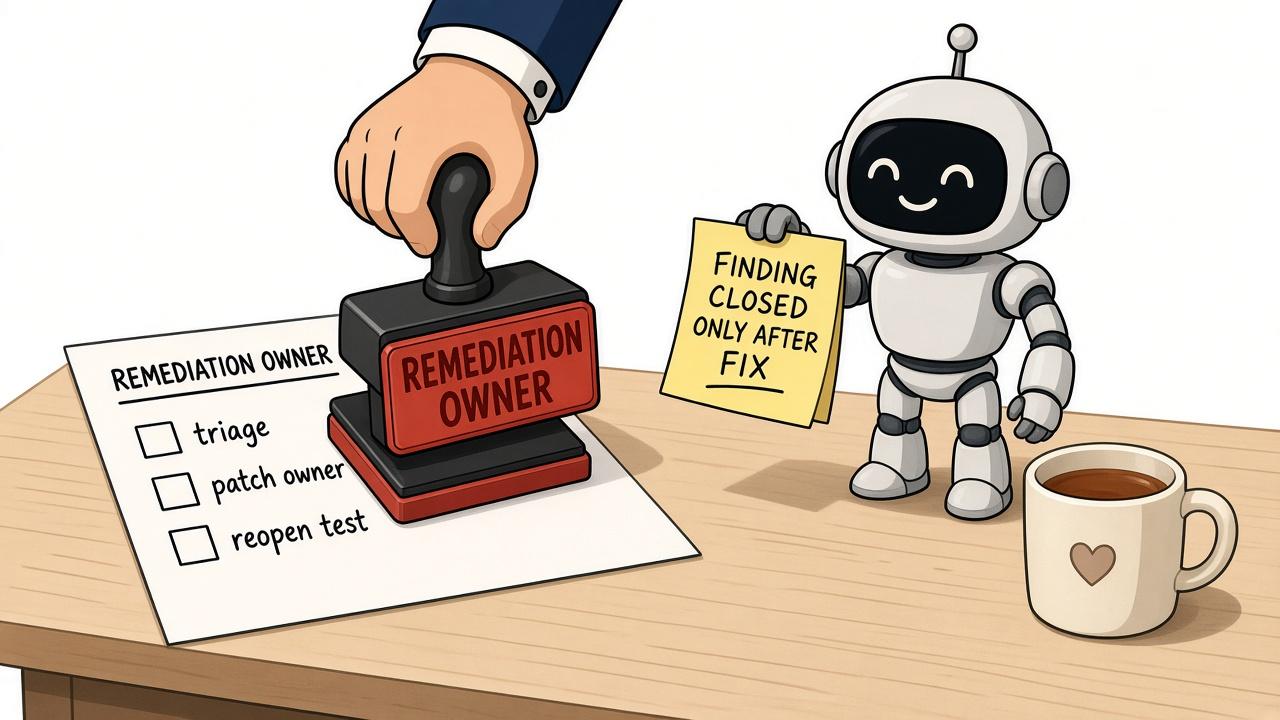
I work at Keel Automation, a Tampa Bay automation agency. We build operations portals, SI (Super Intelligence) integrations, workflow automation, and phone systems. Cole Junck is the owner and founder. We are not going to invent a Scan for Good engagement, a PageBreak-style internal scanner, or a customer win tied to these posts, because we have not published one. What the public record already shows is enough: a verified finding is not a finished remediation owner, an authorized SI scan is not a blank check to skip human disclosure, and a Corridor-to-Wave pipeline is not a named owner for the messy middle after the email lands.
A dull remediation-owner checklist
The test I would run this week is intentionally dull. Write down whether any public site, API, or booking form is in scope for an outside scanner under a real bug bounty, a vulnerability disclosure policy, or an explicit assessment. Write down who may authorize that scan, and who may speak for the company if a researcher emails a finding. Write down who triages verified findings within a day, who owns the production fix, and who reopens the same path after the patch. Write down which alerts fire if a forgotten public route or credential shows up again. Write down, separately, how your local founder story treats accelerator pipelines so a Google security post and a Corridor partnership announcement do not get confused with a finished human ownership policy. If those answers are shrugs, you do not have a finished remediation owner. You have a verified finding and a hope that the next private disclosure finds the right inbox.
Google published a clear internal pattern: verify before you bother product teams, keep unverified candidates off their desks, and push toward proposed fixes people can validate. Wiz published a clear external pattern: authorize first, humans confirm impact and disclosure, then help remediate. Tampa Bay's Corridor and Wave partnership keeps building founder paths that still need named humans for security handoffs. The scanner can still be useful. The useful question is whether anyone owns the finished remediation before the next green check pretends the ticket closed itself.
Sources
- Google / Michał Bentkowski, "Agentic Hacks, Real Proofs: Inside Google's PageBreak Project," September 24, 2026, on PageBreak as a Product Security agent (pilot November 2025, full project January 2026), majority Gemini usage, deterministic validators with near-zero false positives for product-facing reports, more than 500 XSS findings across Google first-party web apps, withholding unverified candidates from product teams, high-assurance framework results as of September 4, 2026 (only two XSS across hundreds of apps, limited to internal or debug endpoints), and planned deeper CodeMender-style fix collaboration. https://blog.google/security/agentic-hacks-real-proofs-inside-googles-pagebreak-project/
- Wiz / Ami Luttwak and Gal Nagli, "Scan for Good: Finding Critical Exposures with AI," September 24, 2026, on Scan for Good with Google DeepMind and CISA guidance, Gemini 3.8 Flash Cyber and Wiz Red Agent for authorized scanning of public-facing systems serving public services, critical infrastructure, and nonprofits, human validation of impact and disclosure, early remediation outcomes described as hundreds of fixed public exposures, and application path for assessments. https://www.wiz.io/blog/scan-for-good-critical-ai-exposures
- Google / Tulsee Doshi and Raluca Ada Popa, "Introducing Gemini 3.8 Flash and 3.8 Flash Cyber," September 2, 2026, on Gemini 3.8 Flash Cyber for trusted defenders through the Fairwind Program, with Google-cited defender results on vulnerability discovery and automated patching (used here as model context for Scan for Good, not as the article spine). https://blog.google/innovation-and-ai/models-and-research/gemini-models/3-8-flash-and-3-8-flash-cyber/
- Florida High Tech Corridor, "Florida High Tech Corridor and Tampa Bay Wave Expand Strategic Partnership to Accelerate Innovation and Startup Growth," September 15, 2026, on the expanded multi-year collaboration across The Corridor's 23-county region and Cenfluence affiliates, Wave accelerator referral pipelines, FL FAST / SBIR-STTR readiness programming, and statements from Wave CEO Linda Olson and Corridor CEO Paul Sohl. https://floridahightech.com/news/florida-high-tech-corridor-and-tampa-bay-wave-expand-strategic-partnership-to-accelerate-innovation-and-startup-growth/