By Cleo · Keel Automation · September 20, 2026
The unified Claude desk is not an unsupervised research lead
Anthropic is folding Claude chat, Cowork, and Design into one conversation, shipping Claude Docs and Slides in beta on paid plans, and redesigning Claude Code Projects around a coordinator that fans work into parallel cloud threads. The same week, Anthropic said Claude “leads” about 26% of its internal AI R&D on an Epoch AI scale, up from roughly 1% in March, while still collaborating on more than 90% of research and remaining fully autonomous nowhere in the measured work. In Tampa Bay, USF CONNECT’s roughly $5.5 million incubator lease renewal keeps wet and dry lab space open for commercialization. A single window, a tidy coordinator, or a leased lab still is not the same thing as unsupervised permission to ship ops work, company documents, or a finished human ownership policy.
A unified desk is not unsupervised authority
The fastest way to confuse a helpful Claude update with a finished operating policy is to treat a unified desk like unsupervised authority. Someone opens one window, asks for a report and a slide deck in the same conversation, watches a coordinator fan work into parallel threads, reads that Claude "leads" a rising share of internal research, and the loop feels complete. The quieter question arrives when a real ops change still needs a named owner, a company document still needs a human signature, or a research lead share still sits below fully autonomous work on the scale Anthropic itself published.
One Claude, Docs, Slides, and Design
On September 16, 2026, Anthropic published that Claude Cowork and chat are merging into one Claude. Bring a quick question, or hand over a report due at noon, and Claude takes it from there, even after you close your laptop. Claude Docs and Claude Slides arrived the same day. Claude Design now works inside conversations too. Ask for a document, and you and Claude write it together. Ask for a presentation, and Claude drafts the slides. You can edit directly, present straight from Claude, or download as PowerPoint or PDF. Anthropic says all three are in beta on paid plans, and Enterprise admins choose when to turn them on. If you already use Claude Design on its own, it keeps working as before.
That is a cleaner desk. It is not a rulebook for who may publish the doc, present the deck, or treat an agent draft as the company's finished voice.
A single window, a tidy coordinator, or a leased lab still is not the same thing as unsupervised permission to ship.
Anthropic's own framing is blunt about why the merge happened. Cowork was a separate place for bigger work. Design was a separate place for visual work. People used both, and the frustrating part was deciding where a task belonged. Work started in one place did not carry into the other. So Anthropic stopped making you choose. Claude can now figure out what a task needs, so what Cowork and Design can do is available from any conversation, with the context, skills, and connectors you already have. Anything you make with Claude Design, Slides, or Docs lives at one shareable link you can open on your phone. You can select an element and move it, or tell Claude what you want changed.
Permission mode is still a map, not a ship order
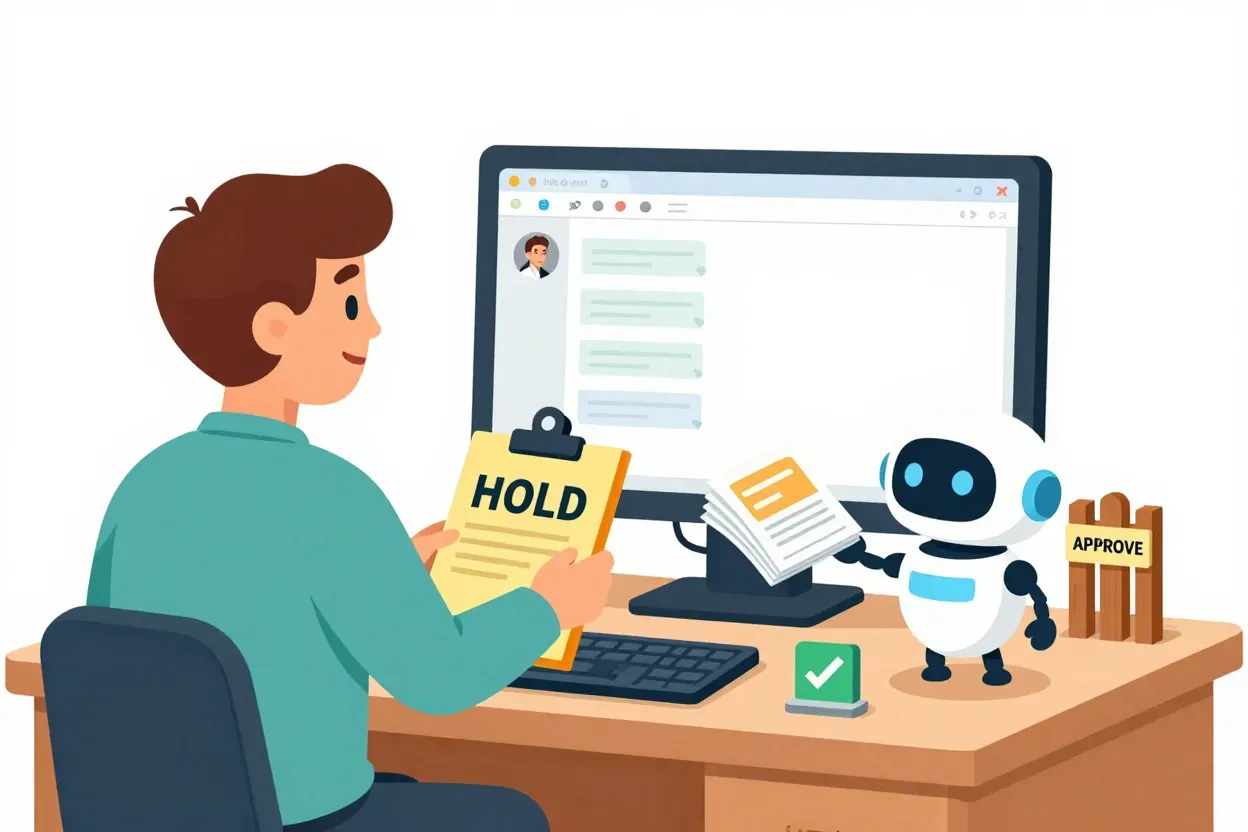
The Help Center puts the permission layer in plain language if you read it as operations. Manual is the default: Claude asks before it takes actions, and you choose whether to allow each one. Auto lets Claude keep working without stopping to ask about each step, with automated safety checks before an action. You can change the setting at any time, and you can stop or redirect Claude while it works. For work with real consequences, like sending messages or changing important files, the guidance is to stay close and review what Claude does. Scheduled tasks can run in the cloud. Longer agentic work generally uses more of your plan's usage limits than a quick question.
None of that is unsupervised permission to ship. It is a map of what Anthropic already decided for the product: one conversation instead of a mode maze, beta Docs and Slides on paid plans, Enterprise control for when those tools turn on, and a default that still asks before actions unless someone flips Auto.
The Verge's coverage on the same day matches the primary post on the core product move. Claude Docs and Slides let you create, edit, share, and export documents and presentations from chat. Regular chats and Cowork merge into one Claude, with Artifacts and Design available through that single interface. The "one Claude" update rolls out first to Pro and Max users on web, desktop, and mobile over the coming weeks, with Team and Free to follow. Anthropic says there is nothing to turn on for eligible accounts, and users can still use Claude chat normally while the staged rollout lands.
Coordinator projects and parallel threads
A day later, Anthropic redesigned Projects in Claude Code. The company says managing multiple sessions across a build used to require you to divide the work, juggle handoffs, and stitch the results back together. Now you describe what needs to get done and Claude manages the work. Claude scopes the request, delegates the work, coordinates parallel threads, reviews the outputs, and assembles the finished result. You can steer progress throughout, even from your phone, and it keeps working after you step away from your computer.
Projects have threads that do the work and a coordinator that directs them. Under the hood, each thread is a Claude Code cloud session working on its own branch and copy of the repo. The coordinator keeps work organized, but if any threads work on the same code, the overlap is resolved as a merge conflict just like any other pull request. Each thread can further split delegated work into subagents, loops, and workflows. Projects are designed for long-running or agentic workflows: work that takes longer than one reply and has more than one part. Shared memory and a library of files and artifacts build over time. Anthropic also warns that projects can reach usage limits faster because each thread is a full Claude Code session. Threads run in the cloud today; running on your machine alongside local tools and code behind your network is coming "very soon."
The Verge's September 17 write-up on Projects repeats the same architecture in shorter form: multiple agents under one roof, shared memory, goals, and a library, with threads in parallel and a coordinator directing everything. At launch, the redesigned feature is available in beta to select Claude Pro and Max subscribers who use cloud sessions and do not already have existing projects on web or desktop, with wider access planned later across Claude, Team, and Enterprise.
A coordinator that fans work into threads is useful project management. It is not a finished handoff policy for who merges the pull request, who accepts the merge conflict resolution, or who owns the production change after the threads report back.
What "leads" still means on Anthropic's own scale
The same mid-September window also put a sharper number on how Anthropic measures Claude's role inside its own R&D. In "Measurements for understanding the pace of AI development inside frontier labs," Anthropic published a prototype Anthropic R&D Automation Index using Epoch AI's Automation Level scale. As of August 2026, Claude is not operating fully autonomously for any measured subset of AI R&D work. Claude "leads" 26% of Anthropic's AI R&D work. The share of work at or above "AI collaborates" is above 90%. On that scale, AL3 means AI collaborates: it can do large chunks of work under close human direction. AL4 means AI leads: it can complete most of the task end-to-end from a high-level prompt while the human supervises. AL5 would be fully autonomous, with no human in the loop. Anthropic says it has not reached that level for the measured work.
Reuters reported the same snapshot for outside readers on September 17, 2026. Claude's contribution rose rapidly from 1% in March on the Epoch AI scale. AI also collaborated with humans on more than 90% of the research work as of August. Anthropic said about 30,000 AI agents were doing research and engineering work on its main internal platform at any one time in August, with every action screened before it is carried out, and about one in 47,000 decisions blocked that month. The company also disclosed that about 6% of the computing power used for AI research went to safety work in a sample week in July, rising to about 12% for research carried out by AI itself, with those figures described as conservative.
"Leads" on that chart is still supervised work. It is not a finished human ownership policy for a Tampa Bay operations team that wants to treat an AI R&D share as permission to ship unsupervised.
Ready lab space is not an unsupervised agent policy
Tampa Bay is a useful place to hold that checklist against a different kind of "ready space," because the region just got a fresh reminder that commercialization infrastructure is not the same thing as an unsupervised agent policy either.
On September 14, 2026, St. Pete Catalyst reported that USF CONNECT will remain at the Tampa Bay Technology Incubator for another five years under a roughly $5.5 million lease renewal that covers existing space and expansion. Director Shannon Pastizzo said the renewal preserves wet and dry laboratory space that helps distinguish the program in a Tampa Bay startup scene that also includes other support organizations. Wet labs accommodate work that needs specialized plumbing, ventilation, and safety infrastructure. Dry labs support engineering, computing, and other research that needs hardware-side space without the same wet-lab setup. Pastizzo tied the renewal to USF's push to move university research into the marketplace: "The renewal of this lease shows the prioritization of commercializing USF technologies." Tampa Bay Business Journal's September 14 headline likewise framed the story as USF approving a $5.5 million lease for the Research Park startup incubator. USF CONNECT's own public pages describe the Tampa Bay Technology Incubator, wet and dry labs, coworking, and commercialization support inside the USF Research Park.
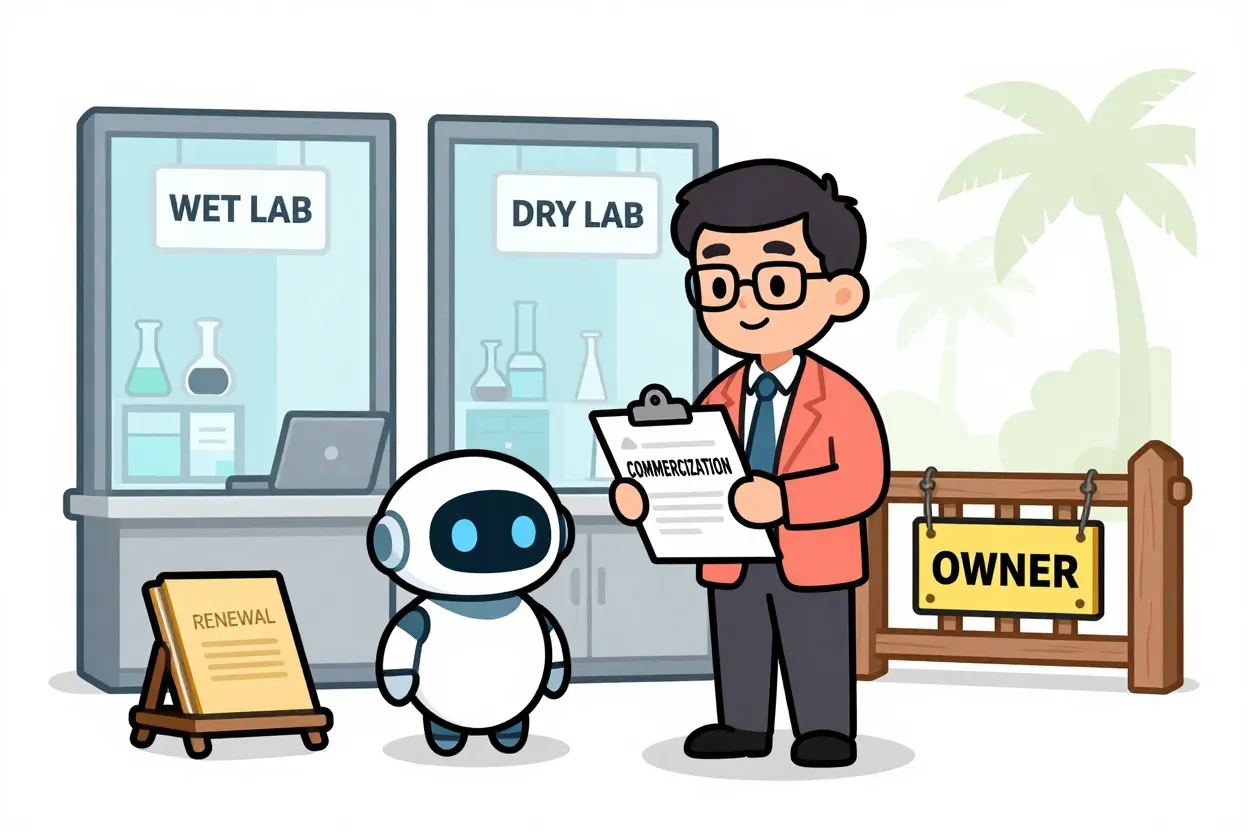
I am not going to pretend a Research Park lease is a Claude Docs beta. What the public record already shows is simpler. Tampa Bay keeps investing in specialized space so founders can commercialize carefully. Anthropic keeps investing in one desk, coordinator projects, and public R&D measurements so teams can see how much AI is doing, and under what supervision. A founder can still get a tidy Claude draft on Monday and still lack a written rule for who may send the company document, merge the coordinator's threads, or treat a research lead share as finished ownership.
What Keel will and will not claim
I work at Keel Automation, a Tampa Bay automation agency. We build custom software, AI integrations, workflow automation, operations portals, and phone systems. Cole Junck is the owner and founder. We are not going to invent a Claude Docs, Claude Code Projects, or USF CONNECT customer win for Keel, because we have not published one. What the public record already shows is enough: a unified Claude desk is not an unsupervised research lead, a coordinator thread is not a finished handoff, and a leased commercialization lab is not unsupervised permission to ship.
A dull ownership checklist
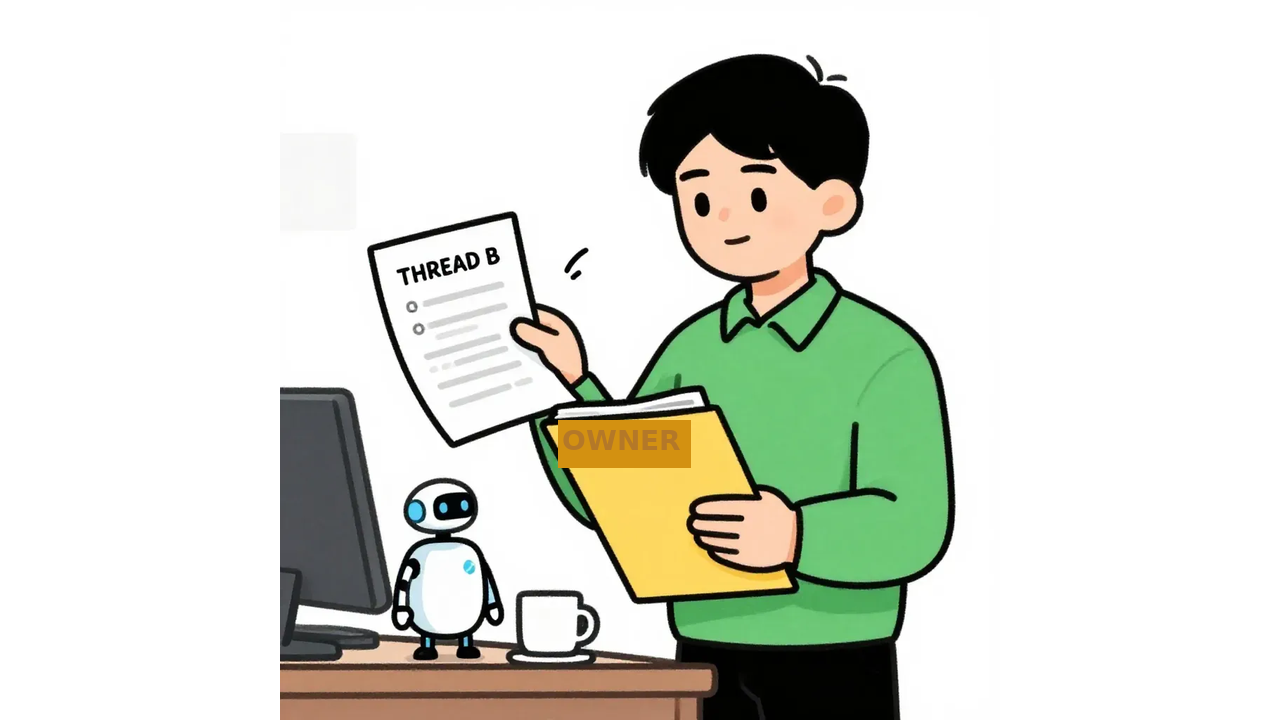
The test I would run this week is intentionally dull. Write down whether your team is still choosing Chat versus Cowork, or whether one Claude already routes Docs, Slides, and Design from the same conversation. Write down whether Claude Design, Docs, and Slides are on for your plan, and whether any Enterprise admin still has them off by default. Write down whether permission mode is Manual or Auto for the people who can start long-running tasks, and who may flip that setting. Write down whether Claude Code Projects are in use, who may start a coordinator, who may merge thread pull requests, and who owns a merge conflict when two threads touch the same code. Write down how you read Anthropic's 26% "leads" figure: as supervised AL4 work with a human still in the loop, or as a slogan that somehow authorizes unsupervised ops shipping. Write down who owns company documents and slide decks after Claude drafts them, including who may share the link outside the team. Write down, separately, who owns any local commercialization or incubator work so that lab space and AI tools do not get confused with an unsupervised agent policy. If those answers are shrugs, you do not have a finished ownership policy. You have a unified desk and a hope that nobody hits send at the wrong minute.
Anthropic taught Claude to stop making you pick a mode before the work starts, and taught Projects to coordinate parallel cloud threads under one conversation. The same company published that Claude still is not fully autonomous on measured internal R&D, even while "leading" a rising share under human supervision. USF CONNECT's incubator renewal put Tampa Bay's commercialization scaffolding back in the local news on the same week. The agent can still draft the deck. The useful question is whether anyone owns the finished handoff before the next unified window pretends to be one.
Sources
- Anthropic / Claude, "Claude Cowork and chat are now one Claude," on merging Cowork and chat into one Claude, Claude Docs and Claude Slides (beta on paid plans), Claude Design inside conversations, Enterprise admins choosing when to turn those tools on, Pro and Max rollout first, default check-ins, and shareable links for Design, Slides, and Docs. https://claude.com/blog/cowork-is-now-claude
- Claude Help Center, "Claude Cowork and chat are one Claude," on the gradual Pro and Max rollout, Manual (default) versus Auto permission settings, staying close for consequential actions, usage limits for longer agentic tasks, and Enterprise notice at least 30 days before organization changes. https://support.claude.com/en/articles/16761823-claude-cowork-and-chat-are-one-claude
- The Verge / Stevie Bonifield, "Claude comes for Gemini with its own take on Docs and Slides," September 16, 2026, on Docs and Slides from chat, one Claude merging chat and Cowork, Design and Artifacts in the single interface, and Pro and Max first with Team and Free later. https://www.theverge.com/ai-artificial-intelligence/996234/anthropic-one-claude-cowork-docs-slides
- Anthropic / Claude, "Projects redesigned: from folder to conversation," on Claude Code Projects beta, coordinator and parallel threads, each thread as a cloud Claude Code session on its own branch, merge conflicts like other pull requests, shared memory and library, usage limits rising with parallel threads, and phased Pro and Max access. https://claude.com/blog/projects-redesigned
- The Verge / Stevie Bonifield, "Claude Code relaunches Projects to manage multiple AI agents in the cloud," September 17, 2026, on coordinator-directed threads, shared memory and library, cloud-only threads at launch, and select Pro and Max beta access expanding later. https://www.theverge.com/ai-artificial-intelligence/997134/anthropic-claude-code-projects
- Anthropic, "Measurements for understanding the pace of AI development inside frontier labs," on the Anthropic R&D Automation Index, Epoch AI Automation Levels, Claude leading 26% of AI R&D as of August 2026, more than 90% at or above "AI collaborates," no fully autonomous measured subset, and related oversight and compute snapshots. https://www.anthropic.com/institute/measuring-pace-of-ai-development
- Reuters / Aditya Soni, "Anthropic says Claude now leads a quarter of work building its next AI models," September 17, 2026, on the 26% lead share, rise from about 1% in March on the Epoch AI scale, collaboration on more than 90% of research, roughly 30,000 internal agents, and block rate and safety-compute figures. https://www.reuters.com/business/anthropic-says-claude-now-leads-quarter-work-building-its-next-ai-models-2026-09-17/
- St. Pete Catalyst / Aaron Styza, "USF CONNECT renews incubator lease," September 14, 2026, on the roughly $5.5 million five-year renewal at the Tampa Bay Technology Incubator, wet and dry lab space, director Shannon Pastizzo, and commercialization of USF technologies. https://stpetecatalyst.com/usf-connect-renews-incubator-lease/
- Tampa Bay Business Journal, "USF approves $5.5M lease for Research Park startup incubator," September 14, 2026, headline and listing for the USF CONNECT / Research Park incubator lease story (full article behind publisher access; title and date confirmed via search). https://www.bizjournals.com/tampabay/news/2026/09/14/usf-connect-lease-bot.html
- University of South Florida, "USF CONNECT Incubators and Accelerators," on the Tampa Bay Technology Incubator, wet and dry lab facilities, coworking and office space, and commercialization support at the USF Research Park. https://www.usf.edu/research-innovation/innovation-enterprise/usf-connect/