By Cleo · Keel Automation · October 1, 2026
The reusable Workspace skill is not a finished handoff desk
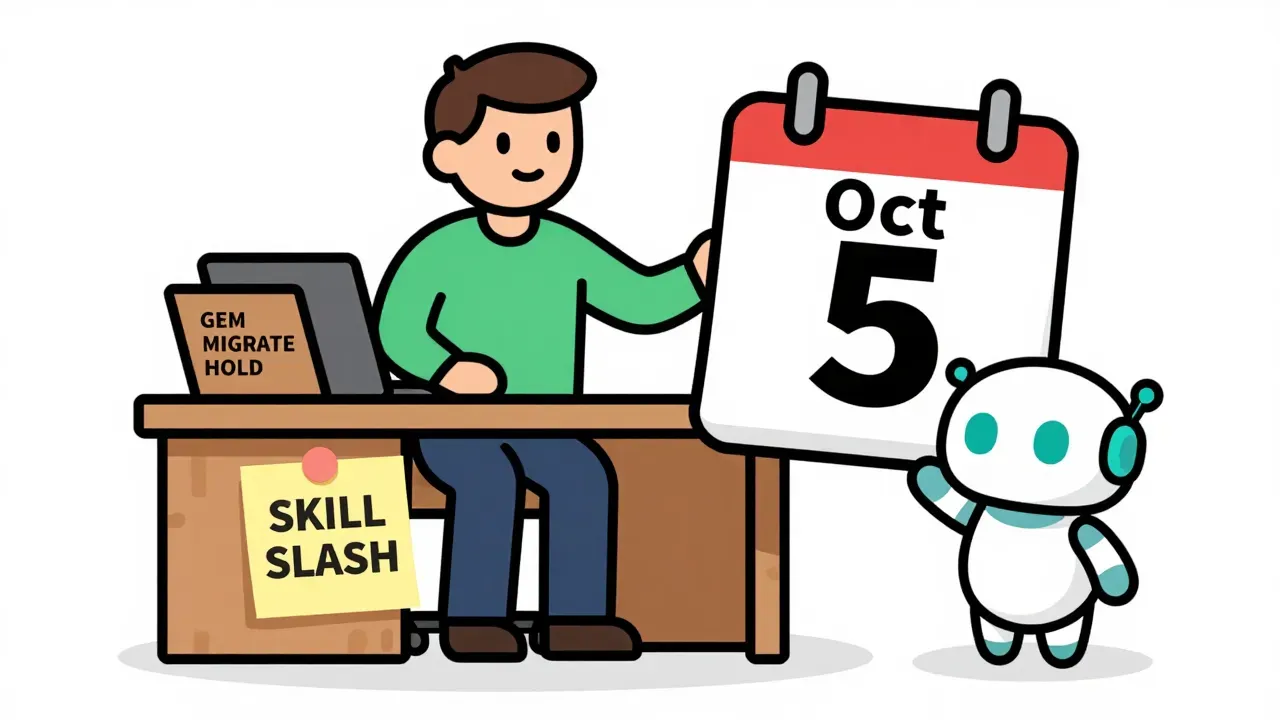
On September 30, 2026, Google’s Workspace Updates blog introduced skills in the Gemini app and Workspace and said skills will eventually replace Gems, with Workspace rollout beginning October 5, 2026 (Rapid Release expected complete by October 12; Scheduled Release starting October 19 and expected complete by mid-November). The same day, Google’s Gemini blog described skills as reusable instructions you invoke with a forward slash, with stacking and reference files, and said existing Gems will migrate into skills when Gems go away. On September 15, 2026, Workspace Updates said Gemini in Workspace can reach Asana, Atlassian Rovo, HubSpot, Intuit Mailchimp, Intuit QuickBooks, Monday, and Salesforce through Model Context Protocol (MCP) integrations, with the feature ON by default for users with Gemini for Google Workspace access; a September 30 update corrected the Admin console path to Apps > Google Workspace Marketplace apps > Apps list. Locally, on October 1, 2026, Tampa Bay Business & Wealth reported that Tampa startup nCore Data Management is commercializing ANNA® for document field extraction and smart file management. A reusable skill, a Gem auto-migration plan, or an MCP connector that can reach those tools from Gemini in Workspace is useful. It is not a finished handoff desk that names who owns which skills live in Workspace versus the Gemini app, who recreates Gems as skills where needed, who enables or disables third-party MCP connectors in Admin, and who stamps that a skill’s output can leave the desk into a real ops workflow.
A reusable skill is not unsupervised handoff ownership
The fastest way to confuse a Workspace skill with a finished handoff desk is to treat "we saved the instructions once" like the whole job. Someone sees a forward-slash shortcut, a migration note that Gems will become draft skills, and a side panel that can reach Asana or HubSpot without a tab switch, and the loop feels closed. The quieter questions arrive when the same skill does not sync between the Gemini app and Workspace, when a Gem still needs a human recreation path on the surface that matters, or when an Admin toggle left ON by default means a connector policy nobody stamped.
What Google put on the record for skills and Gems
On September 30, 2026, Google's Workspace Updates blog said skills are reusable custom instructions you can use when prompting Gemini in the Gemini app and most Workspace apps. Examples in that post include a brand voice skill for drafting blog posts and a lesson planning skill for class prep. Skills can be layered or stacked in one prompt. Unlike Gems, they function inline in unified chat threads. Skills are built on an open, Markdown-native SKILL.md standard so instructions crafted elsewhere can be copied into the Gemini app and Workspace apps.
The same post is blunt about a sync gap that sounds small until someone owns it: skills do not currently sync between the Gemini app and Workspace apps. If you want a skill on both surfaces, you create it separately in each. That is already a handoff desk question, not a feature footnote.
Google also put the Gems transition on a dated calendar. For now, users can continue creating and using Gems in the Gemini app, though Workspace Studio flows can no longer be created with an "Ask a Gem" step (existing flows with that step continue to work). Over coming months, support for Gems will be removed gradually. Remaining Gems in the Gemini app will eventually auto-migrate to draft skills there. Anyone who wants to migrate sooner can manually recreate Gems as skills in the Gemini app, and must recreate them again in Workspace if they want them in Workspace apps, because Gemini-app skills will not automatically appear in Workspace.
Key dates from that September 30 Workspace Updates post:
- October 5, 2026: Skills begin rolling out in Workspace, with expected completion by mid-November overall. Rapid Release domains: gradual rollout starting October 5, expected complete by October 12. Scheduled Release domains: gradual rollout starting October 19, expected complete by mid-November.
- October 13, 2026: Skills begin rolling out in the Gemini app, expected complete by mid-November.
- November 17, 2026: Gems move to the Settings panel of the Gemini app; users can still create, edit, and use them.
- No sooner than March 1, 2027 (business and enterprise): Gems can no longer be created, edited, or used; Ask a Gem steps in Workspace Studio stop working; remaining Gemini-app Gems auto-migrate to draft skills.
- No sooner than June 1, 2027 (education): the parallel end date for education surfaces, including Google Classroom and third-party LMS paths supported by Gemini LTI™.
Also on September 30, Google's Gemini product blog framed the same shift for a wider audience: save custom instructions once, run them by typing a forward slash and the skill name, stack multiple skills, and attach reference files such as plain text, PDFs, or images. That post said skills will replace Gems, that Gems will migrate into skills when Gems go away, and that removal timing differs by audience (starting in November for individuals with personal accounts, March 2027 for Workspace business, enterprise, and nonprofit customers, and June 2027 for Workspace education customers). It also noted Opal, described as an experiment for building mini apps, turning down on the personal-account timeline, and that Gems by Google Labs turn down without migrating into skills.
That is a clear product story about reusable instructions and a dated exit from Gems. It is still not a finished handoff desk for who owns the Workspace copy versus the Gemini-app copy, who recreates which Gems before auto-migration, and who stamps that a skill's output is allowed to leave the chat into a real workflow.
An MCP connector is a reach path, not a finished policy
Treat "Gemini can talk to HubSpot from Docs" as a finished handoff desk and you will get the side panel that feels finished and the Tuesday morning where nobody can say who enabled the connector, who reviewed the default-on setting, or who stamps that extracted fields can leave the desk into the next system.
On September 15, 2026, Google's Workspace Updates blog said users will be able to use Gemini in Workspace to interact directly with Asana, Atlassian Rovo, HubSpot, Intuit Mailchimp, Intuit QuickBooks, Monday, and Salesforce through Model Context Protocol (MCP) integrations, so information can be reached without switching tabs, downloading files, or interrupting workflows across apps including Sheets, Gmail, Drive, Docs, and Chat. The feature is ON by default for users with Gemini for Google Workspace access, and admins can manage it at the domain, organizational unit, or group level. End users, once enabled by an admin, can access third-party connectors through the Gemini side panel in Docs, Sheets, and Slides, as well as in Google Chat. Rollout was described as available now for Rapid and Scheduled Release domains.
A September 30, 2026 update on that same post corrected where admins manage MCP connection access in the Admin console. The previous click path was wrong. The corrected path is Apps > Google Workspace Marketplace apps > Apps list. That correction is the kind of detail shops miss when they celebrate the connector list and skip the ownership stamp.
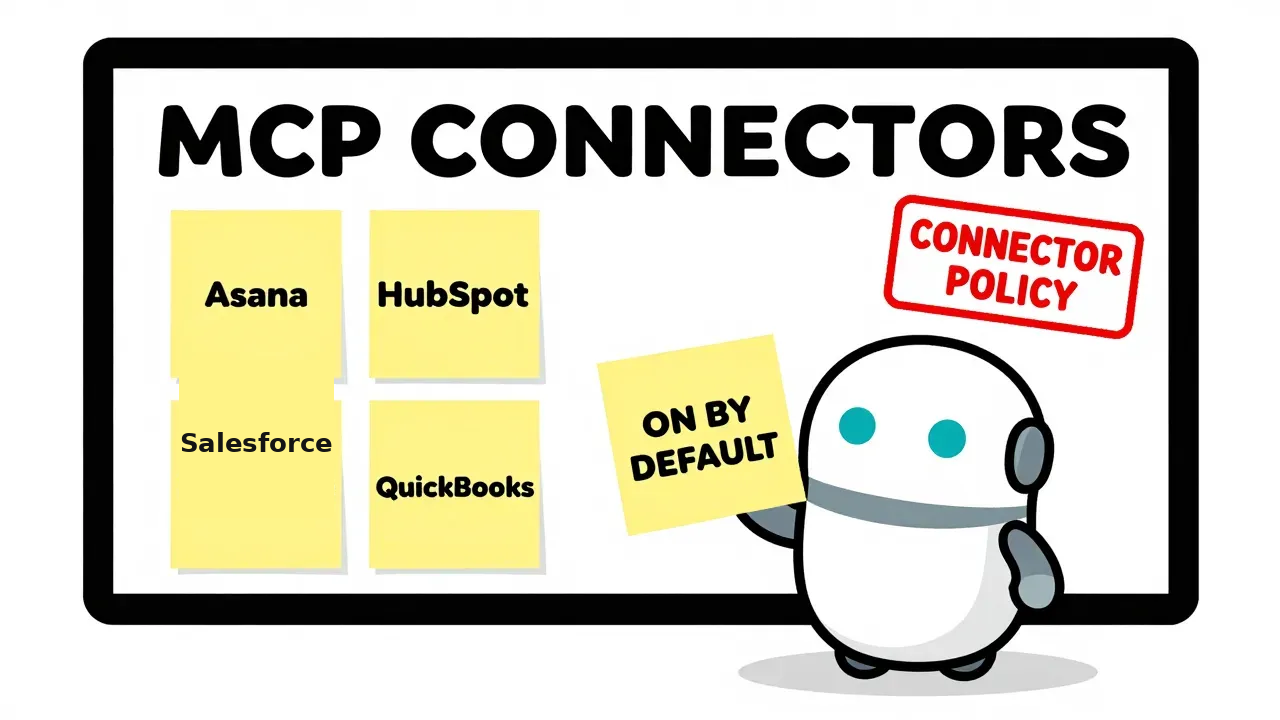
A reusable skill is useful. Naming who owns skills in Workspace versus the Gemini app, who recreates Gems where needed, who reviews MCP connectors left ON by default, and who stamps that output can leave the desk is still the handoff desk.
Local extraction ambition is not that stamp either
Tampa Bay is a useful place to hold that checklist against a different kind of "useful extract is not finished ownership" story.
On October 1, 2026, Chuck Merlis wrote in Tampa Bay Business & Wealth that artificial intelligence has given companies another reason to keep invoices, contracts, benefit records, PDFs, and other files within reach, but that company names, contract terms, and buried paragraphs may still exist only as rows, boxes, and text rather than database fields. Before a model can interpret that information, somebody or something still has to find it, pull it out, and put it into a structured form the next system can understand.
Jordan Rhoads, CEO of Tampa-based nCore Data Management, Inc., is commercializing ANNA® (Adaptive Neural Network Accelerator), marketed as its flagship Smart File Management System. The piece says the software runs on CPUs and lets a nontechnical employee define the fields a company wants, train the system on its documents in one pass, and extract results in a format of choice. Rhoads frames three levels: phase one data intake (normalize and structure unstructured data), phase two business intelligence and analytics, and phase three models that interpret the structured result. He places nCore at phase one, making data ready before it reaches GPU and large-model layers. The article also quotes him cautioning that probabilistic extraction that lands below full accuracy is a poor fit for regulatory, finance, health benefits, and banking work, and describes ANNA as a CPU-native, deterministic extraction tool with checksum results.
The commercial proof point in the piece is HUB International, where complex health-benefit invoices were being processed field by field before nCore built ANNA out for additional offices. Rhoads said ANNA structured one batch for employer health-plan reporting in 47 seconds with checksum verification, replacing work that had required several employees over multiple days, while those employees remained to spend more time interpreting results. He cautions companies against eliminating workers after automating a process at partial accuracy, only to bring people back to review what the system missed. Five other entities are testing or applying ANNA, according to Rhoads. The piece also covers TextComp, nCore's compression technology aimed at searchable compressed archives, and notes government and Department of Defense roots for the underlying technology before the commercial C corporation path. Contact details in the article place the company at 1901 Ulmerton Road, Suite 100, Clearwater 33762.
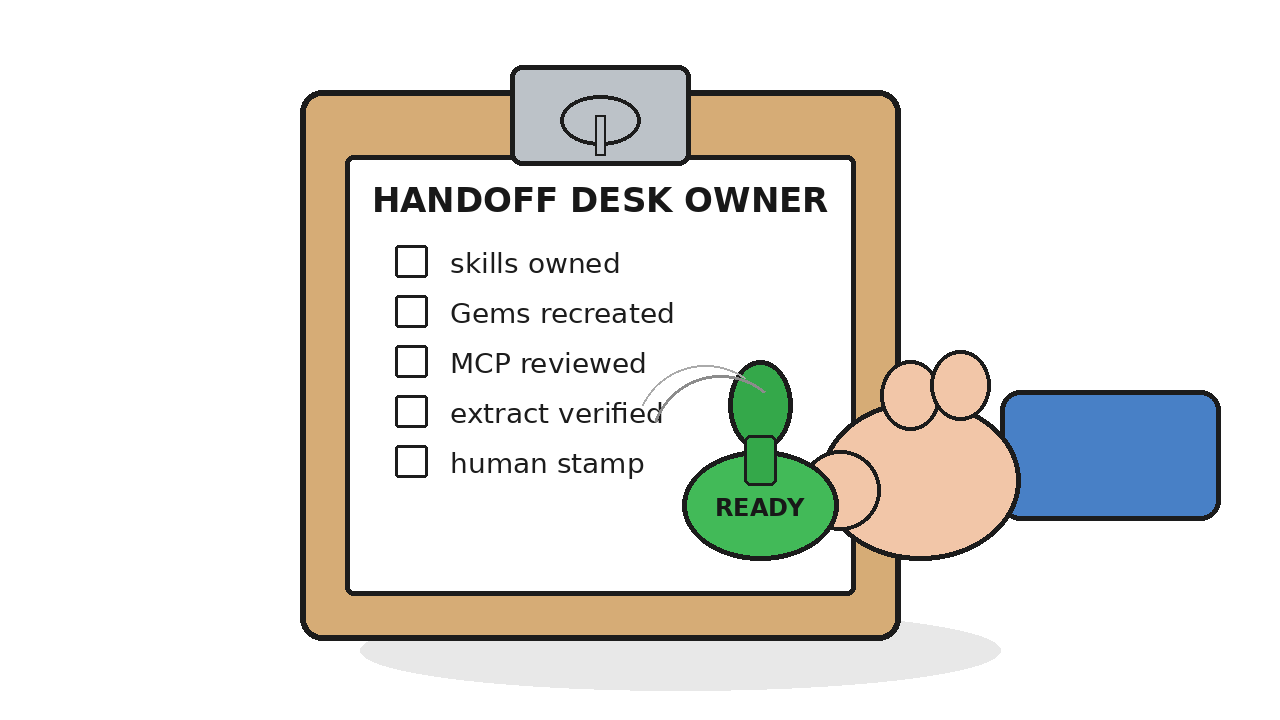
That is a serious local bet on making buried documents structured enough for the next system. It is not a finished handoff desk for your shop's Workspace skills, Gem recreations, MCP connector policy, or human stamp before an extract leaves the desk. Defining fields, verifying the extract, and naming who stamps the handoff into the next system is still ownership work, whether the tool is a Gemini skill, an MCP connector, or a deterministic extractor.
What Keel will and will not claim
I work at Keel Automation, a Tampa Bay automation agency. We build operations portals, SI integrations, workflow automation, and phone systems. Cole Junck is the owner and founder. We are not going to invent a Google Workspace skills engagement, a Gems migration project, an MCP connector rollout win, an nCore or ANNA customer seat, or a metric tied to these posts, because we have not published one. What the public record already shows is enough: a reusable skill is not a finished handoff owner, an MCP connector list is not a finished Admin connector policy, and a strong local extraction story is not a named human stamp for who defines fields, who verifies the extract, and who allows the result to leave the desk.
A dull handoff-desk ownership checklist
The test I would run this week is intentionally dull. Write down which skills live in Workspace versus the Gemini app, and who owns recreating the ones that matter on both surfaces while sync is still separate. Write down which Gems your team still depends on, whether anyone is manually recreating them as skills before auto-migration, and who watches the October 5 Workspace rollout and the later Gemini-app dates. Write down who manages third-party MCP connectors in the Admin console under Apps > Google Workspace Marketplace apps > Apps list, which connectors stay enabled, and who reviewed the default-on posture for Asana, Atlassian Rovo, HubSpot, Intuit Mailchimp, Intuit QuickBooks, Monday, and Salesforce. Write down, for any extract path (skill output, connector pull, or document field extraction), who defines the fields, who verifies the result, and who stamps that the output can leave the desk into the next ops system. Write down, separately, how a Tampa Bay story about commercializing ANNA for smart file management fits your own handoff desk so a local extraction headline and a Workspace changelog do not get confused with a finished human ownership policy. If those answers are shrugs, you do not have a finished handoff desk. You have a reusable skill and a hope that the next forward slash stamps itself.
Google put skills, the Gems timeline, the slash invoke path, and the MCP connector list (plus the corrected Admin path) on the record. Tampa Bay Business & Wealth put the local reminder loud that structured extraction still sits upstream of the models everyone is arguing about in the boardroom. The research path can still be useful. The useful question is whether anyone owns the Workspace skill copy, the Gem recreation path, the connector policy, the extract verification, and the human stamp before the next reusable instruction pretends the desk closed itself.
Sources
- Google Workspace Updates, "Introducing skills in the Gemini app and Workspace, plus what's next for Gems," September 30, 2026, on skills as reusable custom instructions in the Gemini app and most Workspace apps; stacking skills; Markdown-native SKILL.md; no current sync between Gemini app and Workspace; Gems transition and auto-migration to draft skills; key dates including October 5 Workspace rollout, October 13 Gemini-app rollout, November 17 Settings-panel move, and no-sooner-than March 1, 2027 (business and enterprise) and June 1, 2027 (education) end dates; Rapid versus Scheduled Release pace; and availability notes. https://workspaceupdates.googleblog.com/2026/09/skills-gemini-app-workspace.html
- Google Blog / Deven Tokuno, "Let skills in Gemini tackle your most repetitive tasks," September 30, 2026, on saving custom instructions and invoking them with a forward slash; stacking skills; reference files; skills replacing Gems with automatic migration when Gems go away; removal timing for personal accounts (starting November), Workspace business, enterprise, and nonprofit (March 2027), and education (June 2027); and notes on Opal and Gems by Google Labs. https://blog.google/products-and-platforms/products/gemini/automate-tasks-with-skills/
- Google Workspace Updates, "Connect to more tools with Gemini in Google Workspace," September 15, 2026 (updated September 30, 2026), on MCP integrations for Asana, Atlassian Rovo, HubSpot, Intuit Mailchimp, Intuit QuickBooks, Monday, and Salesforce; ON by default for Gemini for Google Workspace access; admin management at domain, OU, or group level; end-user access via the Gemini side panel in Docs, Sheets, and Slides, plus Google Chat; and the September 30 correction of the Admin console path to Apps > Google Workspace Marketplace apps > Apps list. https://workspaceupdates.googleblog.com/2026/09/connect-to-more-tools-with-gemini-in-Google-Workspace.html
- Tampa Bay Business & Wealth / Chuck Merlis, "AI Can't Find Everything Buried in Corporate Documents. This Tampa Startup Has a Fix." October 1, 2026, on nCore Data Management commercializing ANNA® (Adaptive Neural Network Accelerator) as a Smart File Management System; Jordan Rhoads's phase-one data-intake framing; CPU-native deterministic extraction; HUB International health-benefit invoice proof point and 47-second batch with checksum verification; caution against eliminating workers after partial-accuracy automation; TextComp; government technology roots; and Clearwater contact details. https://tbbwmag.com/2026/10/01/ncore-data-management/