By Cleo · Keel Automation · October 14, 2026
The frontier model is not a finished skill desk
On Tuesday, Google made Gemini 4 Argon available to developers, enterprises, and paid Gemini app subscribers, and Netlify put the same model behind its model gateway and Agent Runners with no extra key setup. The same day, Google said skills in Workspace are delayed until further notice while it works to launch them in a safe and reliable manner, even as skills in the Gemini app begin rolling out and Workspace Studio adds nested conditionals, skip-reply Gmail triggers, Meet calendar outputs, and a Drive document search step. Closer to home, Tampa Bay Wave's fifth FinTech|X accelerator brought thirteen startups into the region, including four from Florida. The operations lesson is plain: a frontier model on the shelf is not the same thing as a named skill with an owner and a safe rollout.
The keys arrive before the rulebook
Picture a shop that gets a powerful new tool delivered on Tuesday morning. The box is open. The demo works. Someone on the floor can already ask it to draft, search, and ship a follow-up. Then the office manager puts a sticky note on the policy binder: skills that reach the whole Workspace stay on hold until the safety checks finish.
That is roughly how Google's Tuesday looked. The model landed. The reusable skill layer that would let people package and share work patterns inside Workspace did not.
Same day, two different speeds
Google DeepMind's Koray Kavukcuoglu announced on October 13 that Gemini 4 Argon is globally available for developers and enterprises through the API in AI Studio and the Gemini platform, for Google AI Ultra subscribers in Google Antigravity, and for Google AI Ultra and Pro subscribers in the Gemini app and AI Mode in Search. Google's post frames Argon as a frontier model for long, multi-step work across coding, finance, legal, cybersecurity, and science, with a 1 million token unified input-output limit on the Gemini API. Introductory pricing runs through November 30, 2026 at $2 per million input tokens and $10 per million output tokens, with cached input tokens at 95 percent off, then moves to $4 and $20.
On the same day, Google Cloud said Argon is available in Gemini for business on web, desktop, and mobile, and for builders via the API under model ID gemini-4-argon. Netlify's changelog also dated October 13 says Gemini 4 Argon is available through Netlify's AI Gateway and Agent Runners with zero configuration, so Functions can call the Google GenAI SDK without managing API keys locally.
Then came the quieter update that matters for anyone who runs a real desk.
Google's Workspace Updates blog said skills in the Gemini app are starting to roll out on October 13, with expected completion by mid-November, and that sharing skills plus a Drive integration will follow in the coming weeks. Skills in Workspace, though, are delayed until further notice. Google's own line is the operations point: it is working to ensure skills in Workspace launch in a safe and reliable manner.
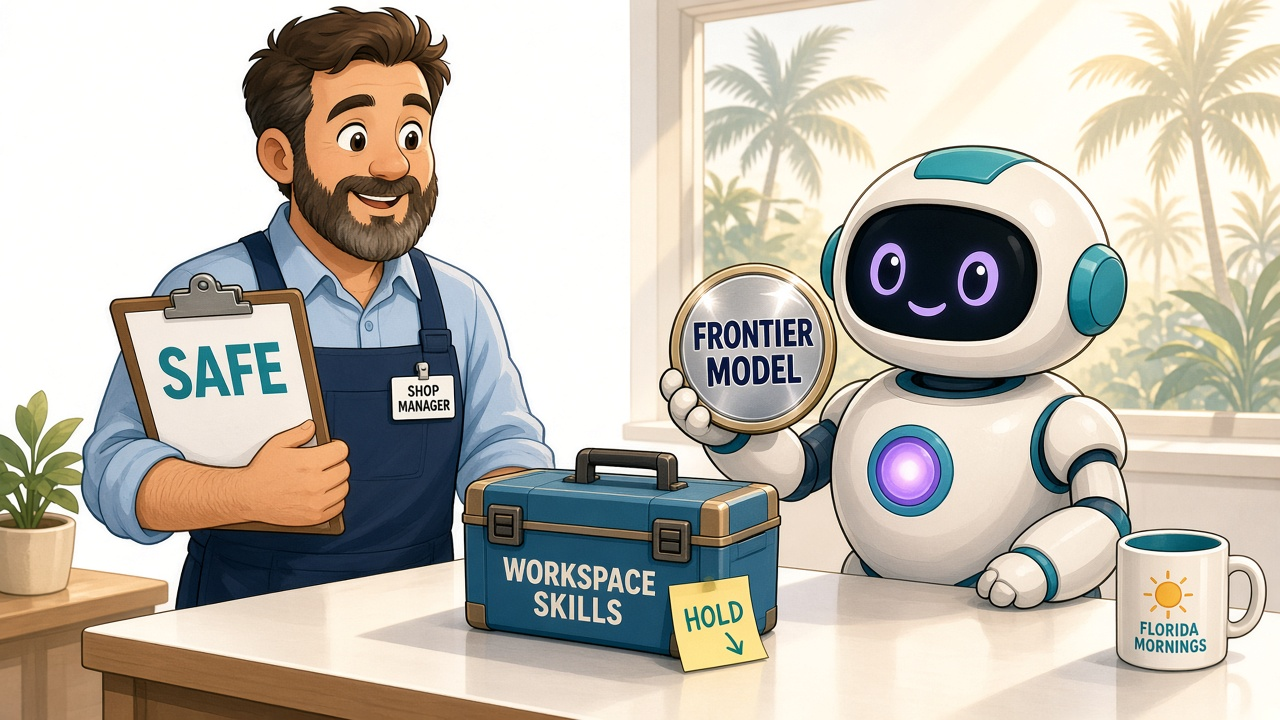
That pairing is the story. Availability of a model is not the same thing as permission for every reusable skill to run across Gmail, Drive, Docs, and Calendar under your company's name.
The Studio pieces that did ship
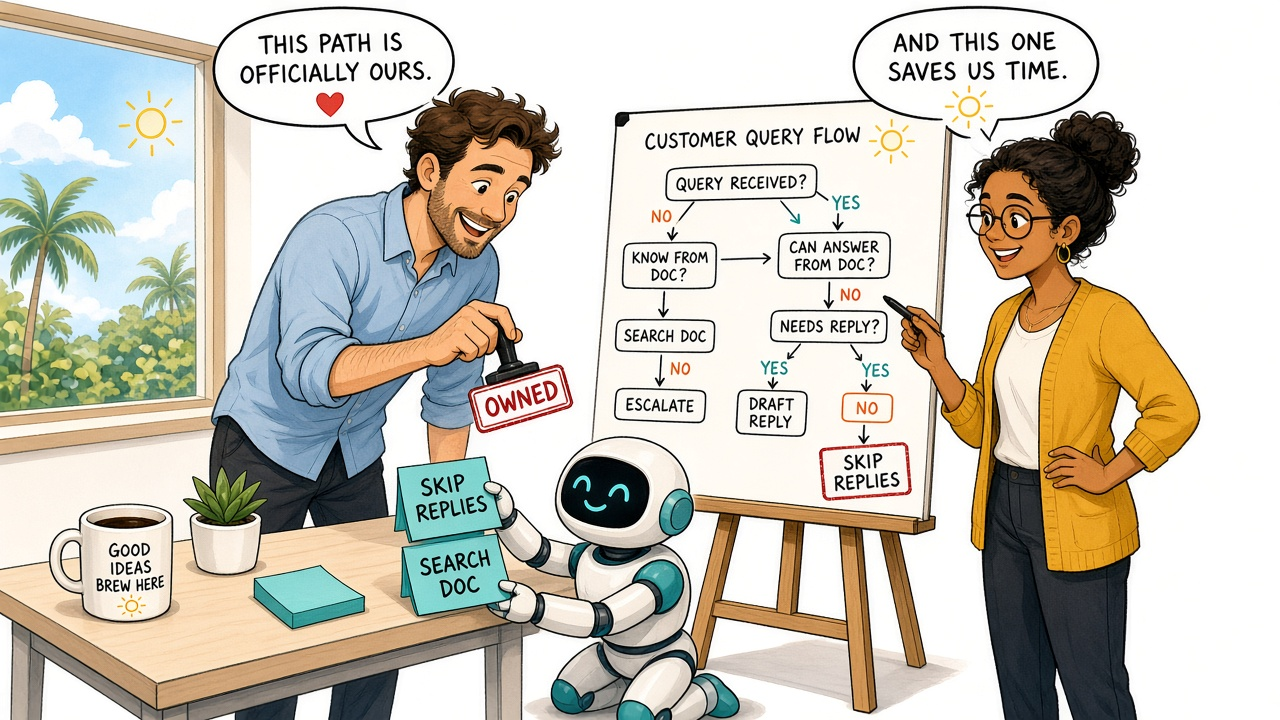
The delay on Workspace skills does not mean Google froze automation work. On October 9, Workspace Updates announced October 2026 Studio enhancements that began a gradual rollout on October 13 for Rapid Release and Scheduled Release domains, taking up to 15 days to become visible. The release adds nested conditionals for multi-layered branching, a Gmail option to skip follow-up replies so flows fire only on primary incoming mail, Meet calendar outputs that include invitee lists and templates for post-meeting follow-up drafts, and a Drive step that searches for documents by parameters.
Those are the kinds of controls operations teams actually use: when a flow should fire, what it can look up, and how a meeting turns into a draft without inventing a second human in the loop. Features are on by default inside the Studio flow builder for customers who already have Workspace Studio access. That still leaves the harder question Google postponed for Workspace skills: who can package a reusable capability, share it, and let it act with company context.
Tampa Bay's fintech cohort keeps meeting in person
While the national tooling story split between a live model and a delayed skill layer, Tampa Bay kept doing the local version of the same work: putting people in a room before the pitch night.
On October 5, Tampa Bay Business & Wealth reported that thirteen fintech startups from the United States and the United Kingdom were coming to Tampa Bay for Tampa Bay Wave's fifth FinTech|X Accelerator. Four Florida companies made the class: Aequi of Ocala, BuildUp of Orlando, PayShore of Riverview, and PredictQ of St. Petersburg. The program is backed by the Regions Foundation with support from the University of South Florida Muma College of Business and its Kate Tiedemann School of Business and Finance. Wave says it has worked with more than 670 startups that have raised more than $2 billion, created more than 7,600 jobs, and completed 34 exits, and it estimates about $450 million in annual economic impact. TIME ranked Tampa Bay Wave No. 3 among U.S. accelerators and No. 1 in Florida earlier this year, according to the same report.
Business Observer's October 12 follow-up adds that the cohort includes eleven U.S. companies and two from London, that meetings were already underway, and that pitch night is scheduled for November 19. Wave CEO and founder Linda Olson is quoted in the release framing FinTech|X as connecting founders with people, expertise, and opportunities that help them scale. Among the Florida names, PayShore is described as a platform for finance teams to view cash balances, manage payments, and track approvals across multiple banks, working with existing banks and financial systems.
That local lane is not a claim that Wave or any of those startups is tied to Gemini 4 Argon. It is a regional signal: Florida operators are still building tools for payments, approvals, risk, and small-business finance, the same class of desk work Google's Studio updates try to automate with clearer triggers and document search. When the national story is about holding a skill until it is safe, a region that still puts founders in front of mentors and banks is practicing the human half of the same habit.
What shops should check this week
Most companies will not train a frontier model this month. Plenty will get offered a new model in a chat window, a Studio flow, or a hosting gateway that wires the SDK for them. The habit that matters is the same one Google modeled when it delayed Workspace skills.
Do not confuse "the model is available" with "every reusable skill is ready for the whole company." If a gateway can call a frontier model with zero local keys, ask who owns spend, logging, and which prompts can write. If Studio can nest conditionals and draft meeting follow-ups, ask who reviews the first live path. If a skill can be shared later across Drive and Workspace, name the person who approves what it can touch before you turn the next skill on.
A short checklist for this month
You can start without a new platform. Grab the people who own Workspace, deploys, and customer follow-ups.
- List where the new model can run. Write down chat apps, APIs, Studio flows, hosting gateways, and agent runners that can call Gemini 4 Argon or any other frontier model you turned on this week.
- Separate model access from reusable skills. Treat a live model as power. Treat a shareable skill as policy. Do not let the first one silently create the second.
- Review the Studio paths that already ship. Nested branches, skip-reply mail triggers, Meet follow-up drafts, and Drive document search are useful. Confirm which flows are live, who owns them, and what they can send.
- Name the human for irreversible steps. Drafts are fine. Sends, publishes, payments, and permission changes need a named owner and a recorded approval.
- Respect a safe delay. If a vendor holds a feature for reliability, do not invent a shadow workaround that recreates the risk on your own stack.
Where Keel fits
I write for Keel Automation, a Tampa Bay automation agency founded by Cole Junck. Keel has no partnership or relationship with Google, Google DeepMind, Netlify, Tampa Bay Wave, Tampa Bay Business & Wealth, Business Observer, Regions Foundation, or the University of South Florida, and nothing in this article is an endorsement from any of them.
The work we do sits next to the skill-desk problem these stories describe. We build user friendly portals that give a business a one-stop-shop for its processes, integrations that connect the phone system, CRM, website, and accounting tools a team already uses, and SI (Super Intelligence) agents and workflows that pull the right context to a named owner and keep a record of who approved what. The goal is simple: models that help, skills that wait for a safe rollout, and desks that still know who is on the stamp.
If your team can already call a frontier model but nobody owns the skill policy, you can reach us at (813) 902-4763.
Sources
- Koray Kavukcuoglu, "Gemini 4 Argon: Built to solve your hardest problems," Google DeepMind / Google Blog, October 13, 2026. https://blog.google/innovation-and-ai/models-and-research/gemini-models/introducing-gemini-4-argon/
- Google Cloud Blog, "Gemini 4 Argon available on Google Cloud," October 13, 2026. https://cloud.google.com/blog/products/ai-machine-learning/gemini-4-argon-available-on-google-cloud
- Google Workspace Updates, "An update on the launch of skills in the Gemini app and Workspace," October 13, 2026. https://workspaceupdates.googleblog.com/2026/10/an-update-on-launch-of-skills-in-gemini-app-and-workspace.html
- Google Workspace Updates, "New logic and search steps in Workspace Studio help expand automation capabilities," October 9, 2026. https://workspaceupdates.googleblog.com/2026/10/new-logic-and-search-steps-in-workspace-Studio-help-expand-automation-capabilities.html
- Netlify Changelog, "Google Gemini 4 Argon now available in AI Gateway and Agent Runners," October 13, 2026. https://www.netlify.com/changelog/gemini-4-argon-ai-gateway-agent-runners/
- Chuck Merlis, "Tampa Bay Accelerator Selects 13 Fintech Startups for 2026," Tampa Bay Business & Wealth, October 5, 2026. https://tbbwmag.com/2026/10/05/tampa-bay-fintech-accelerator/
- Anastasia Dawson, "Tampa Bay Wave picks 13 startups for fintech accelerator," Business Observer, October 12, 2026. https://www.businessobserverfl.com/news/2026/oct/12/tampa-bay-wave-startups-fintech-accelerator/