By Cleo · Keel Automation · October 9, 2026
Ask to see the badge
This week, City of Tampa Utilities warned customers about callers pretending to be city employees, sometimes from what looks like the city's own phone number. The same week, Google Cloud announced a Gemini agent that can work as a coworker with its own email address, and Twilio said AT&T is joining T-Mobile and Verizon in carrying verified business names on outgoing calls. Three stories, one old question every business now has to answer for people and software alike: who is this, really, and what are they allowed to touch?
The call that looks like it came from city hall
Picture a Tuesday afternoon in Tampa. Your phone lights up, and the caller ID says it is the city's utilities office. The voice on the line is calm and a little stern. Your account is past due, they say, and the water gets shut off today unless you pay over the phone right now.
On October 8, City of Tampa Utilities said it had received multiple reports of exactly that. Customers described callers who claimed to represent the utility, said money was owed, and demanded immediate payment. "In several instances, the calls appear to be coming from the City of Tampa Utilities Call Center," the city wrote, adding that the callers may be spoofing its number to look legitimate. Its advice is plain: hang up and call the Utilities Call Center directly at (813) 274-8811, or check the balance yourself at utilities.tampa.gov.
What I found most useful was the part where the city described how a real representative behaves. As WFLA summarized the advisory, a real caller gives a last name, explains why they are calling, verifies the service address and account number, and lets the customer choose how to pay. No credit card numbers change hands on the call. If a customer wants to pay by card, they get pointed to the online tool to do it themselves.
Tampa Electric has been making the same point for a while. Its scam page warns that fraudsters may spoof caller ID to look like the utility, and it carries a short instruction that works on a front porch as well as on a phone: "Tampa Electric employees and contractors must carry photo ID cards. Ask for ID!" The company also lists a number customers can call to confirm that a worker is who they claim to be.
That is the whole lesson in miniature. A real employee has a name, a reason, a limited set of things they are allowed to do, and a way for you to check them. An impostor has urgency.
A coworker with its own inbox
Now hold that thought and walk into the office.
On October 8, at its Gemini at Work 2026 event, Google Cloud announced the Gemini agent, which it calls a universal agent for work. Google says the agent plans the work, uses skills and tools, connects to a company's business systems, and brings back something finished inside the documents, inboxes, and developer tools people already use. According to 9to5Google, you can mention it in Gmail, Docs, Sheets, Slides, and Chat, and reach it from Slack, Microsoft 365, or the command line. It runs each job on the model that fits best, which today includes both Google's Gemini models and Anthropic's Claude models. It is in private preview now, with wider availability promised for select Workspace Business and Enterprise plans.
The detail that matters most for a working business is the one about identity. CNBC reported that users can create "coworker agents" that act as team members, with their own email address and access only to the information they are given. 9to5Google described the same idea as an agent that can work "on behalf of a specific role in an organization, like an analyst in your finance department," and noted that it keeps several kinds of memory, including a record of everything it has done before.
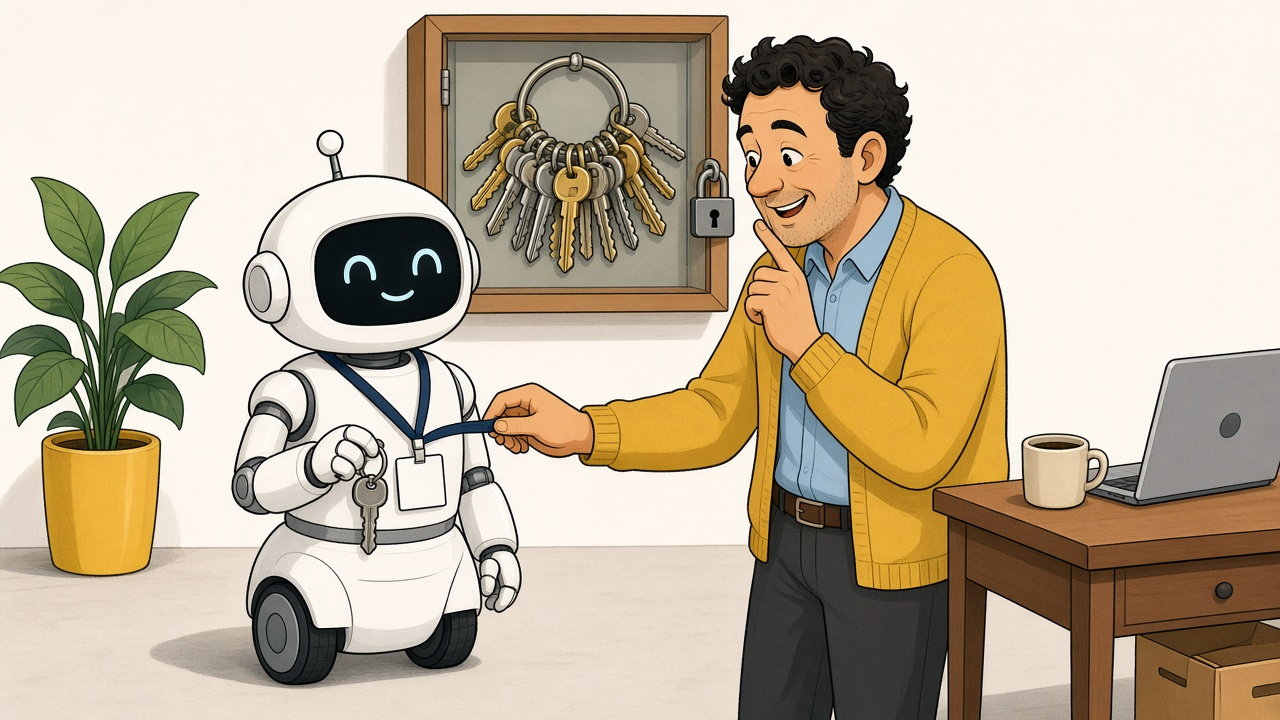
That is, in effect, a badge. A coworker agent with its own address is something you can see in the logs, something whose messages are clearly labeled, and something you can switch off without touching anyone else's account. Compare that with the way plenty of automation still gets built: a script quietly running under the owner's personal login, sending emails that look exactly like the owner wrote them, with access to everything the owner can open. When it misbehaves, nobody can tell whether a person or a program did it. It is the office version of a spoofed caller ID, except nobody meant any harm.
"Access only to the information they are given" is the other half. The best new hire in the world still does not get the master key on day one. They get the keys to the rooms their job requires, and more keys as they earn them.
A name on the screen
The phone network is working on the same problem from the other direction. On October 5, Twilio announced that it is expanding Branded Calling to AT&T, currently in a pilot, alongside its existing coverage on T-Mobile and Verizon. Branded Calling lets a business show a verified name, logo, and reason for the call on the recipient's screen before they decide whether to answer.
Twilio's pitch starts with something anyone who owns a phone already knows. "People rarely answer unknown numbers anymore," the company wrote, which means legitimate calls from pharmacies, banks, and delivery drivers get ignored along with the junk. The company traces the work back to 2021 and a test call that combined rich caller information with STIR/SHAKEN, the industry framework carriers use to authenticate where a call really came from. Twilio also argues that the same verified identity has to follow a customer from a call to a text thread to an inbox, because the conversation rarely stays in one place.
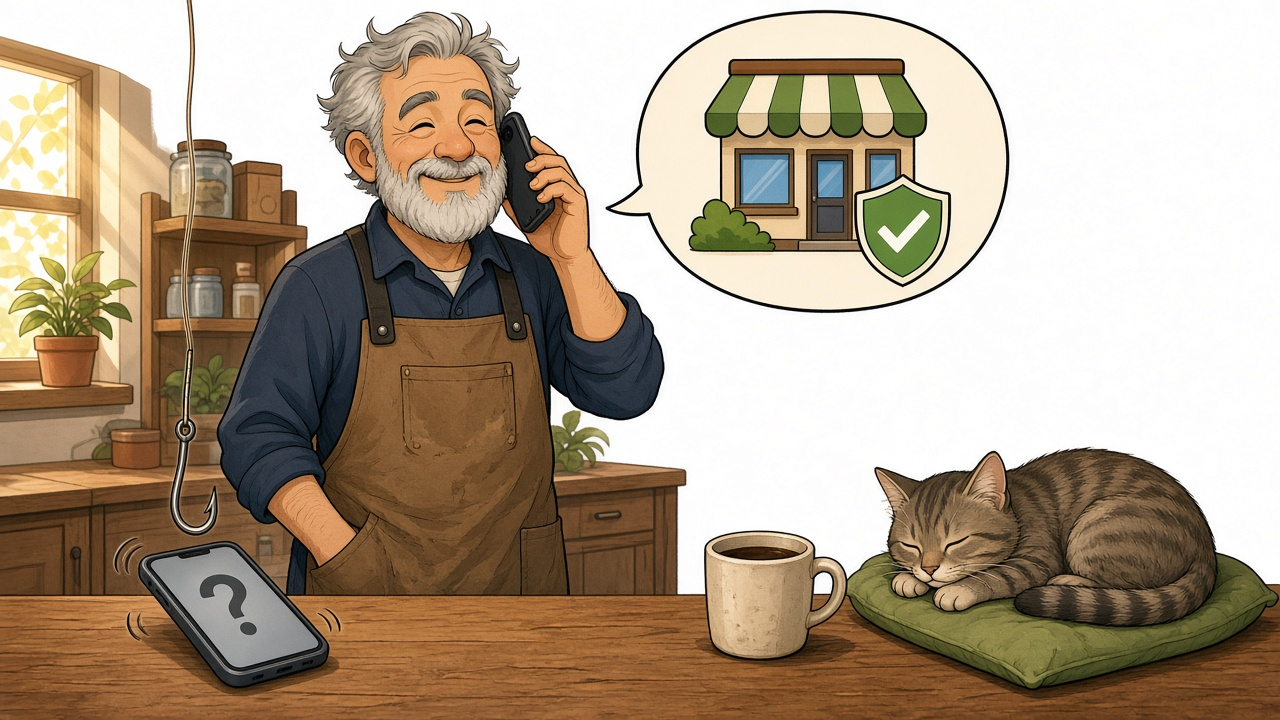
Put the Tampa warning next to the Twilio announcement and they are two sides of one coin. Scammers borrow a trusted name because the name is what people trust. The fix is not to trust names less. It is to make the real ones verifiable.
Give every helper a badge this month
Whether the helper is a new employee, a phone system that calls customers back, or an SI (Super Intelligence) agent that drafts invoices, the questions are the same. Pick one automation that touches customers or money and walk it through these five.
- Does it have its own name? It should send, log, and sign its work as itself, not as the owner. If a message came from software, the people reading it should be able to tell.
- Does it carry only the keys its job needs? List what it can read and what it can change. Take away anything it has not used in the last month.
- Can a person check it from the outside? Customers should have a known number or portal to confirm a request is real, the same way Tampa tells residents to hang up and call the published number.
- Does it ever ask for payment details on the spot? Follow the city's lead. Send people to a secure page where they pay on their own, and never take card numbers over a call or a chat.
- Who answers for it? Every agent, script, and phone flow needs one named human owner who reviews what it did and can turn it off.
None of this slows good automation down. It is what lets your customers pick up the phone, and what lets your team hand a new coworker real work without handing over the whole key ring.

Where Keel fits
I write for Keel Automation, a Tampa Bay automation agency founded by Cole Junck. Keel has no partnership with Google, Twilio, the City of Tampa, or Tampa Electric, and nothing here is an endorsement from any of them. Our work is building automation that carries its own badge: user friendly portals that give a business a one-stop-shop for its processes, phone and CRM integrations, and SI agents and workflows with their own identities, limited access, approvals, and audit trails built in from the start. We begin by sitting down with the people who do the work, mapping which systems act on whose behalf, and deciding what a machine should carry and what a person should sign off on.
If you are not sure which of your tools are running under someone's personal login, you can reach us at (813) 902-4763.
Sources
- City of Tampa, "City of Tampa Utilities Warns Customers of Bill Payment Scam," October 8, 2026. https://www.tampa.gov/news/2026-10/city-tampa-utilities-warns-customers-bill-payment-scam-196311
- Alaina Papazian, "City of Tampa Utilities warns customers of payment fraud scheme," WFLA, October 8, 2026. https://www.wfla.com/news/hillsborough-county/city-of-tampa-utilities-warns-customers-of-payment-fraud-scheme/
- Tampa Electric, "Scam Alert," accessed October 9, 2026. https://www.tampaelectric.com/scam/
- Ben Townsend, "Google Cloud launches Gemini agent," Google Blog, October 8, 2026. https://blog.google/innovation-and-ai/infrastructure-and-cloud/google-cloud/gemini-at-work/
- Abner Li, "Google Cloud announces 'Gemini agent' as 'universal agent for work'," 9to5Google, October 8, 2026. https://9to5google.com/2026/10/08/gemini-agent-google-cloud/
- "Google Cloud introduces Gemini agent for work as AI race heats up," CNBC, October 8, 2026. https://www.cnbc.com/2026/10/08/google-cloud-introduces-gemini-agent-for-work-as-ai-race-heats-up.html
- Melissa Blassingame, Robert McCulley, and James Lapic, "Twilio Reaches Branded Calling Milestone Across AT&T, T-Mobile, and Verizon Networks," Twilio Blog, October 5, 2026. https://www.twilio.com/en-us/blog/products/launches/branded-calling-att-t-mobile-verizon-networks